Iron & Fang Pre-alpha 0.1.1
ES EN
Download
Iron & Fang icon: a human soldier and an orc, half and half, in a bronze ring.

Iron & Fang

Pre-alpha 0.1.1
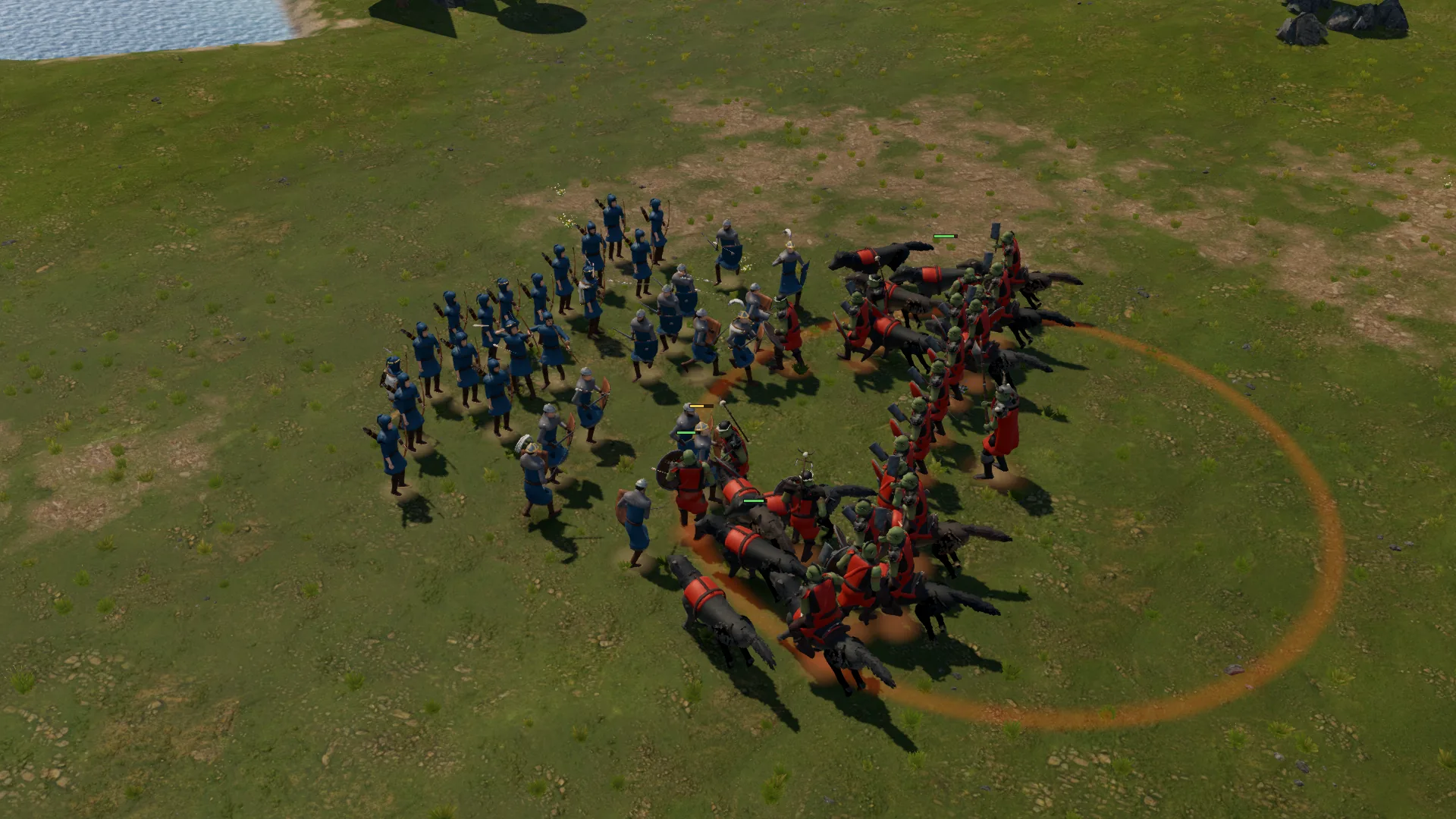
Open-field battle: a line of human infantrymen and archers in blue facing orc warriors, wargs and warg riders in red.
Humans (blue) against orcs (red) in the open field, with wargs and riders among the orcs. The orange ring is the orc warchief's war cry.

The game

Iron & Fang is a 3D real-time strategy game: humans against orcs, with a base, an economy, walls, towers and armies that fight in formation and never retreat.

Pre-alpha 0.1.1 is a full skirmish against the AI, made for you to try out and give feedback on.

  • 2factions: humans and orcs
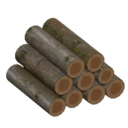
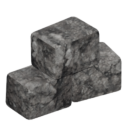
  • FoodWoodGoldStone4 resources
  • 200max population
  • 112×112map tiles, generated from a seed
  • 3AI difficulties, no cheating
  • 230+original sounds and tracks

Two factions: humans and orcs

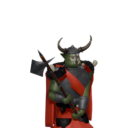
The orc warrior fights a little better than the infantryman and costs less, but orcs take everything back to the lair: they have no camps.

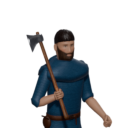
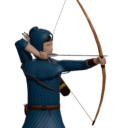
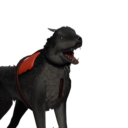
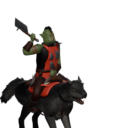
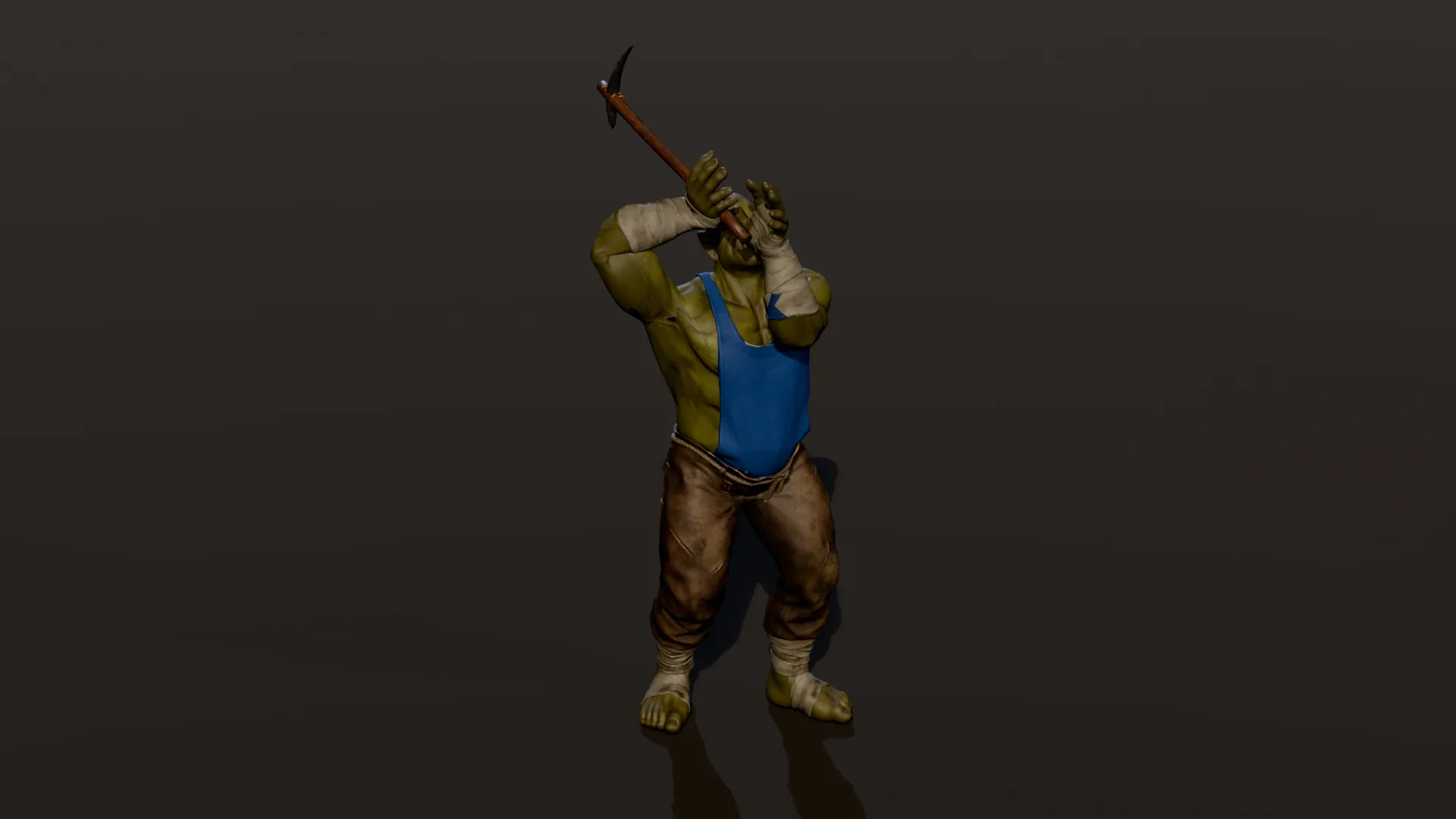
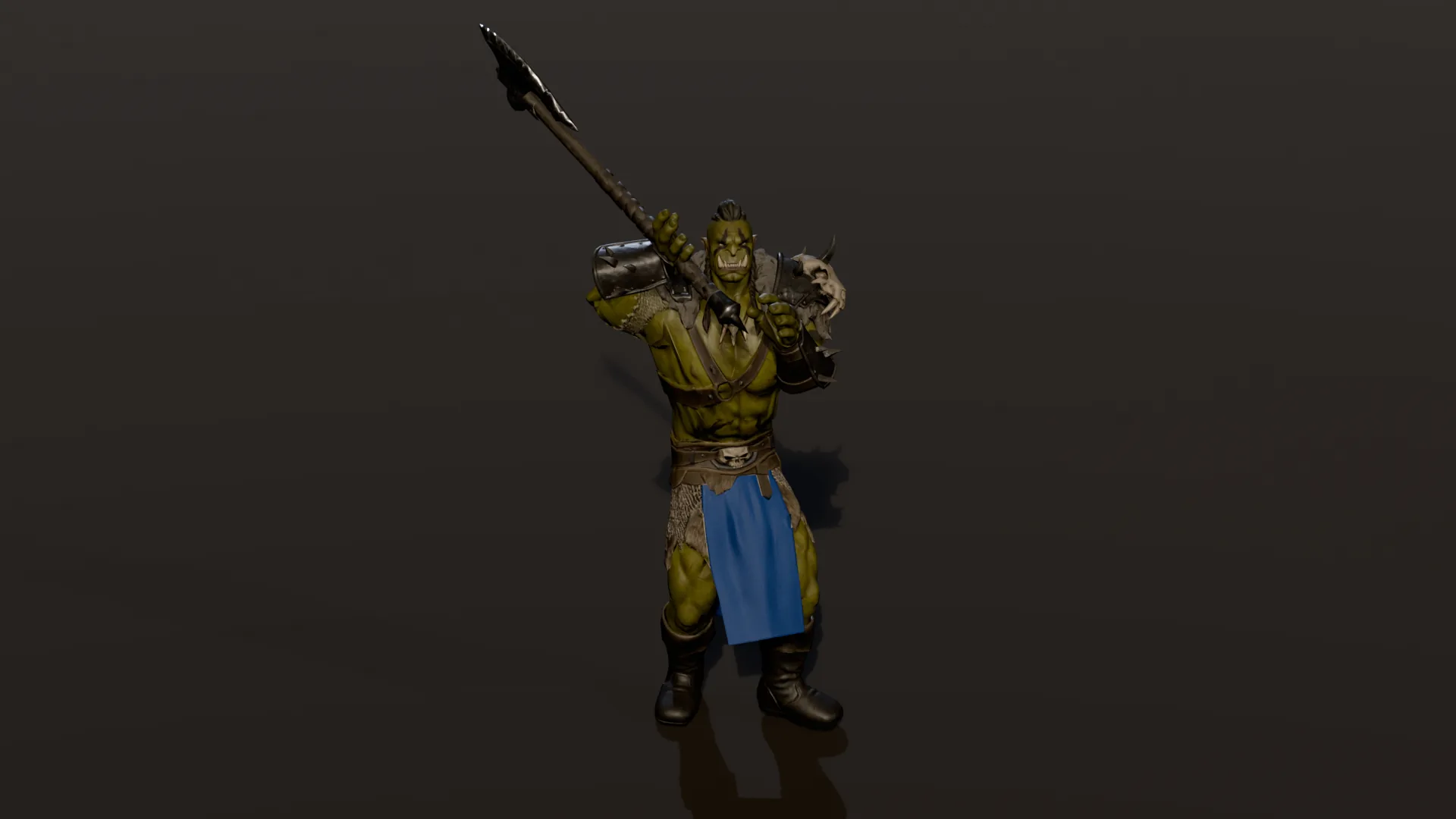
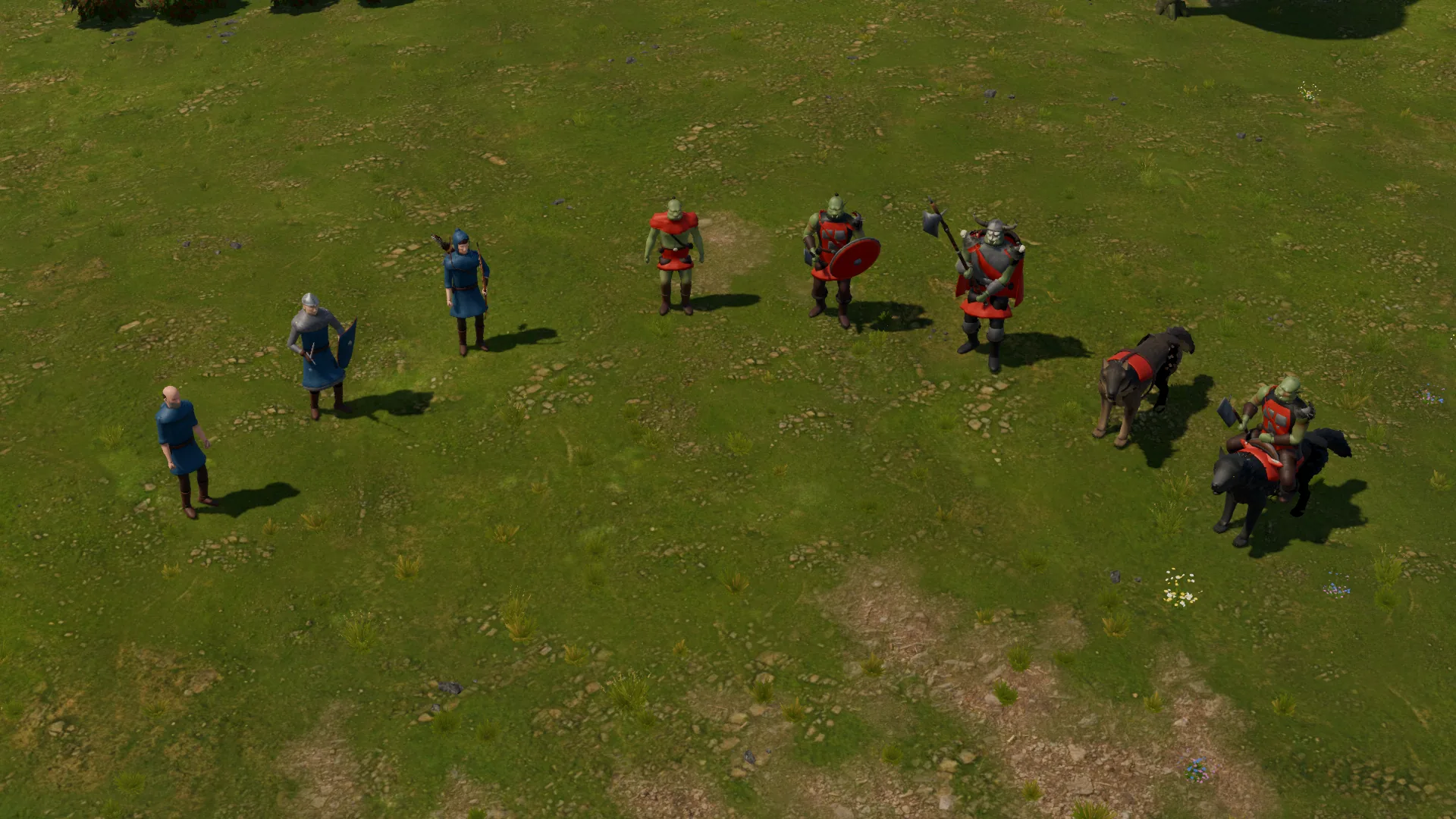
The units of both sides lined up on the grass: worker, infantryman and archer in blue; peon, warrior and warchief in red, a warg and a warg rider.
The units of both sides: worker, infantryman and archer; peon, warrior, warchief, warg and rider.

Humans

Blue side

Units

  • Worker
    Health
    25
    Attack
    doesn't fight

    Food50

  • Infantryman
    Health
    60
    Armor
    1
    Attack
    7 every 1.4 s

    Food60Gold20

  • Archer
    Health
    35
    Attack
    7 every 1.4 s
    Range
    7

    Wood40Gold30

Buildings

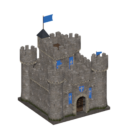
  • Town center

    Health 2000 · garrison 15

    Wood275Stone100

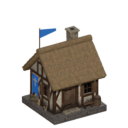
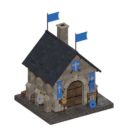
  • House

    +5 population

    Wood30

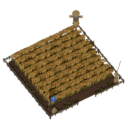
  • Farm

    Replants itself

    Wood60

  • Barracks

    Trains infantrymen and archers

    Wood150Stone30

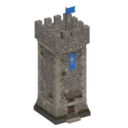
  • Tower

    Garrison 5

    Wood50Stone125

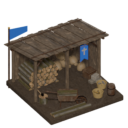
  • Camp

    Drop-off next to the resource

    Wood100

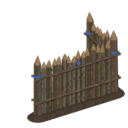
  • Wooden wall

    Per tile

    Wood3

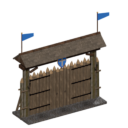
  • Wooden gate

    Opens for your own units

    Wood30

Orcs

Red side

Units

  • Peon
    Health
    30
    Attack
    doesn't fight

    Food45

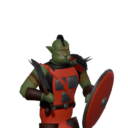
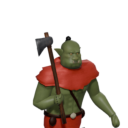
  • Orc warrior
    Health
    65
    Armor
    1
    Attack
    8 every 1.3 s

    Food55

  • Warchief
    Health
    150
    Armor
    3
    Attack
    13 every 1.3 s

    Food150Gold120

    One per side. The war cry adds 25% attack to warriors within 5 tiles.

  • Warg
    Health
    55
    Attack
    7 every 1.0 s

    Food60

    The fastest unit in the game.

  • Warg rider
    Health
    110
    Armor
    1
    Attack
    10 every 1.2 s

    Takes up 2 population. Not trained: formed by mounting.

Buildings

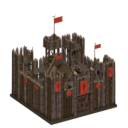
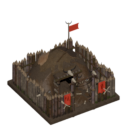
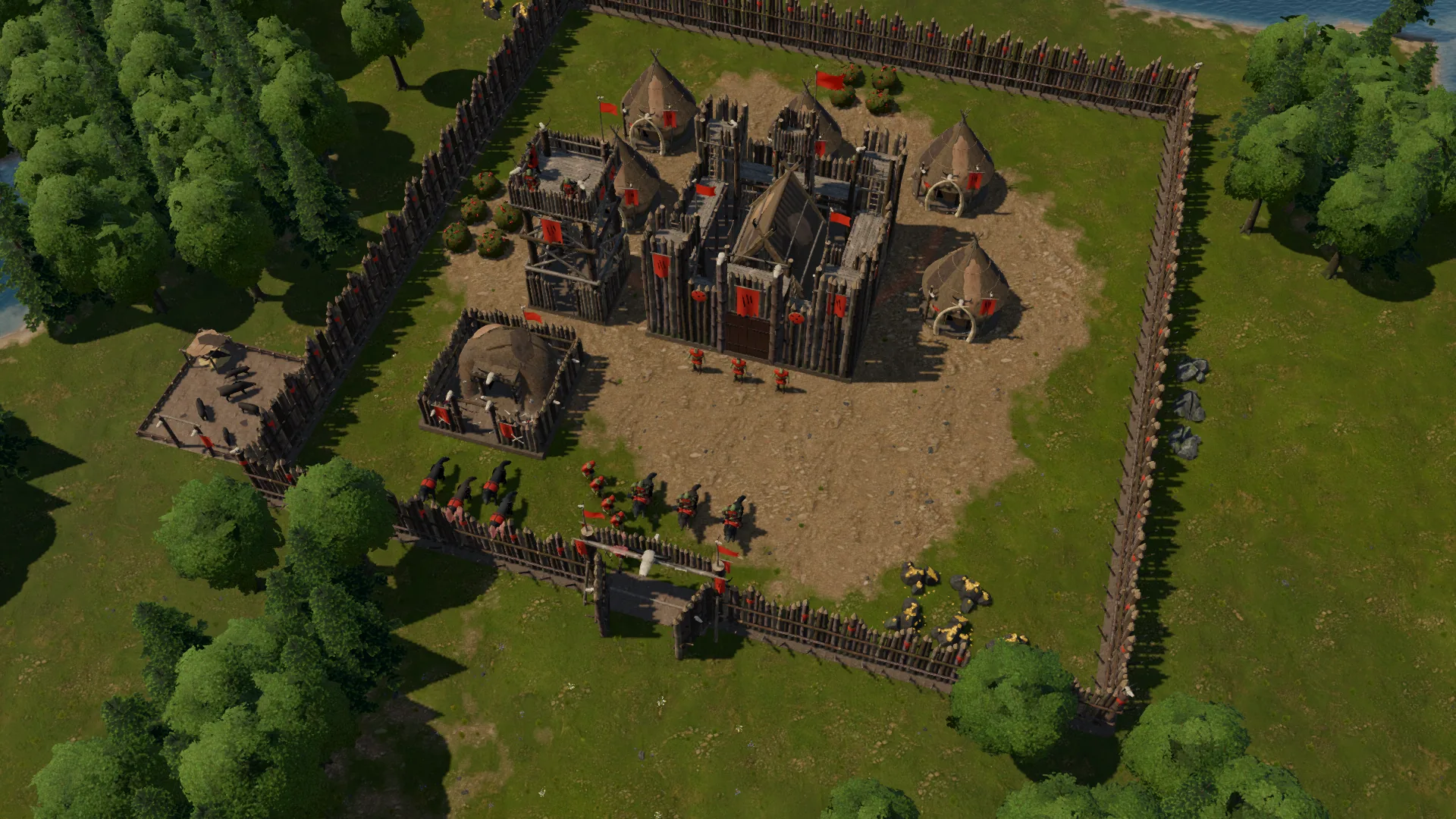
  • Lair

    Health 2000 · garrison 15

    Wood300

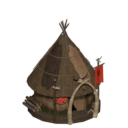
  • Hut

    +5 population

    Wood25

  • Boar pen

    Refills itself

    Wood50

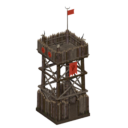
  • Watchtower

    Garrison 5

    Wood80Stone40

  • Warg den

    Trains wargs

    Wood120Stone30
  • Palisade

    Per tile

    Wood3

  • Gate

    Opens for your own units and riders

    Wood30
Already in the game

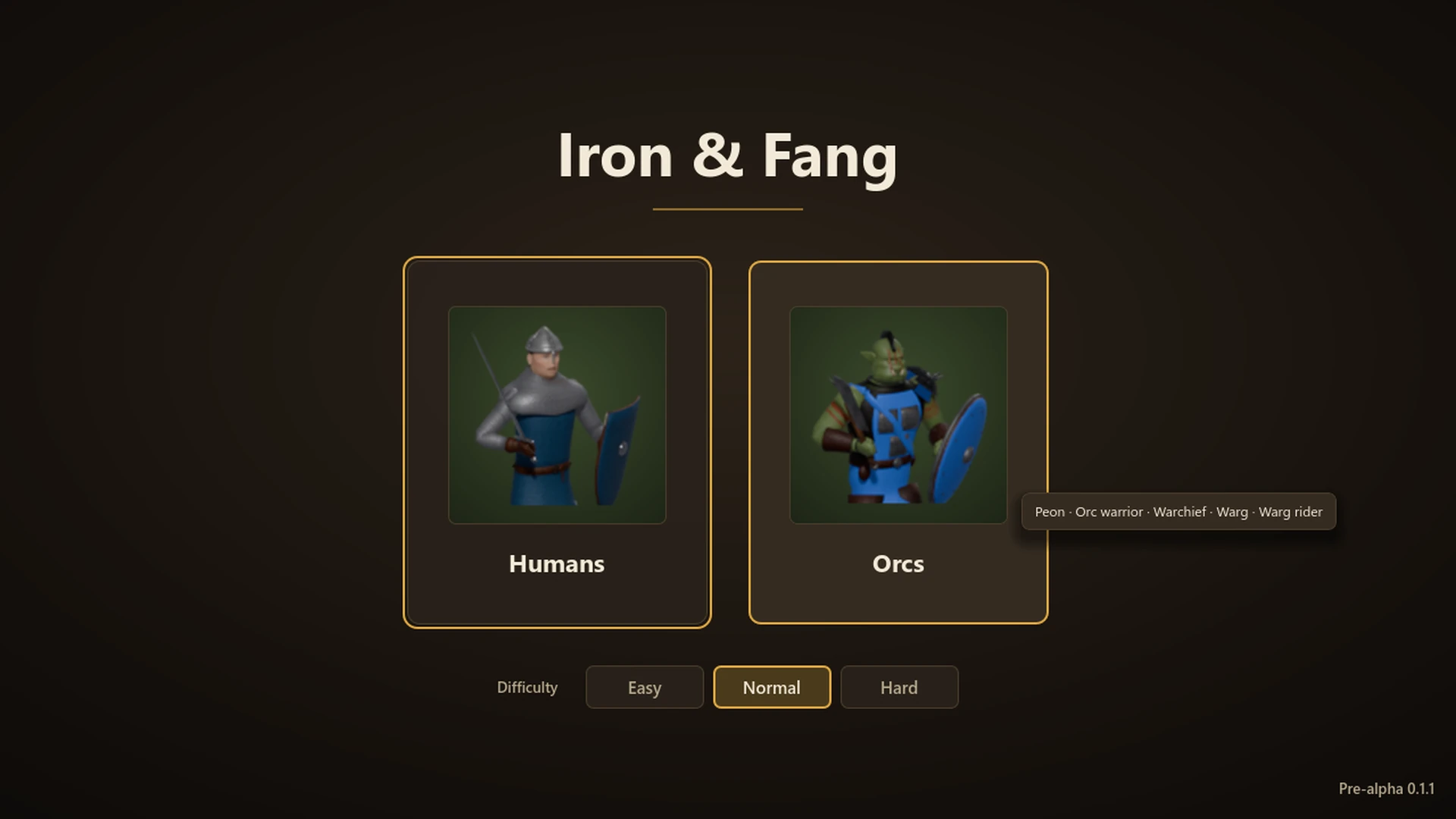
Start screen, the Iron & Fang title, the Humans and Orcs cards with Humans highlighted, and the Easy, Normal and Hard difficulty buttons with Normal selected.
State on launch: Humans focused and Normal difficulty.

Faction and difficulty screen

You pick your side and the AI's difficulty: Easy, Normal or Hard. The rival takes the other faction. When a match ends, “New game” takes you back to this screen.

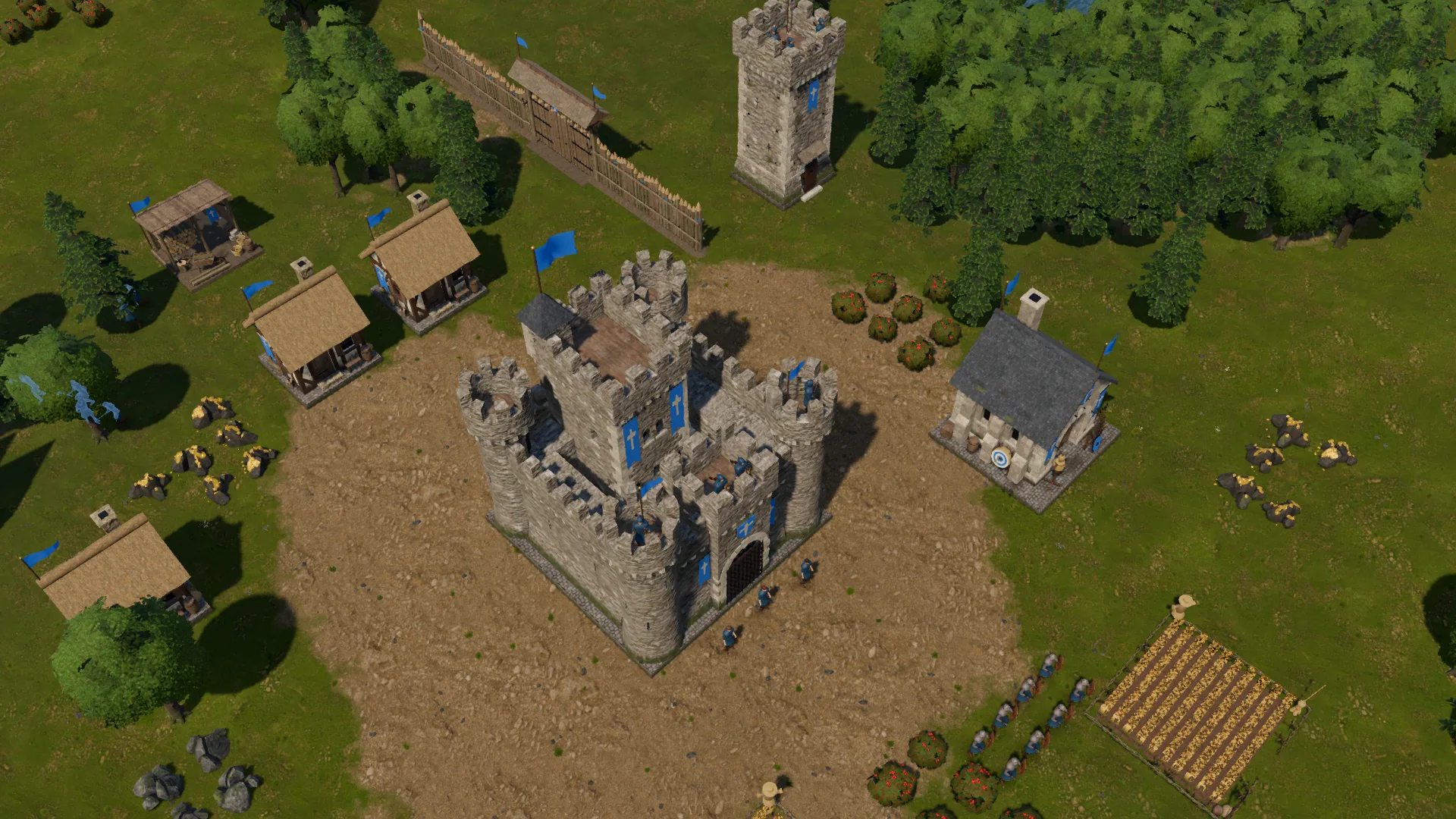
Human base seen from above: a stone town center, houses, a farm, a tower, a stretch of wooden wall and units in formation.
Human base: town center with garrison, houses, farm, barracks, tower, a camp by the forest and a wall with a gate.

A four-resource economy

Food, wood, gold and stone, with berries, trees, gold veins and quarries on the map. Humans replant their farms; the orcs' boar pens refill on their own. Population reaches 200 with houses and huts. Humans build camps next to far-off resources; orcs take everything back to the lair.

Map, terrain and fog of war

A symmetrical 112×112-tile map generated from a seed, with lakes, forests, elevation, veins, quarries and berries, ground vegetation and sun shadows. Whatever hasn't been explored is black, and explored ground out of sight is dimmed.

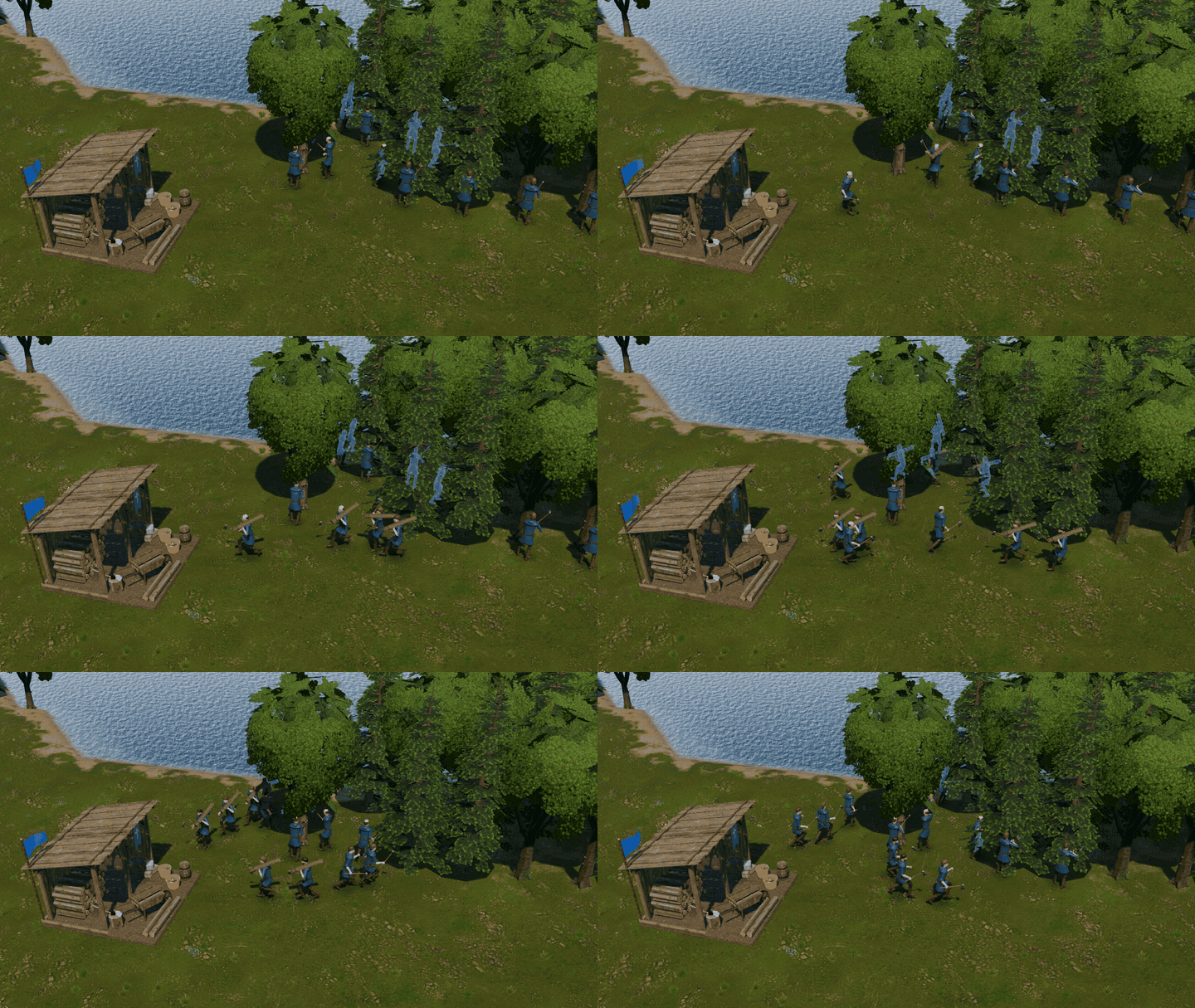
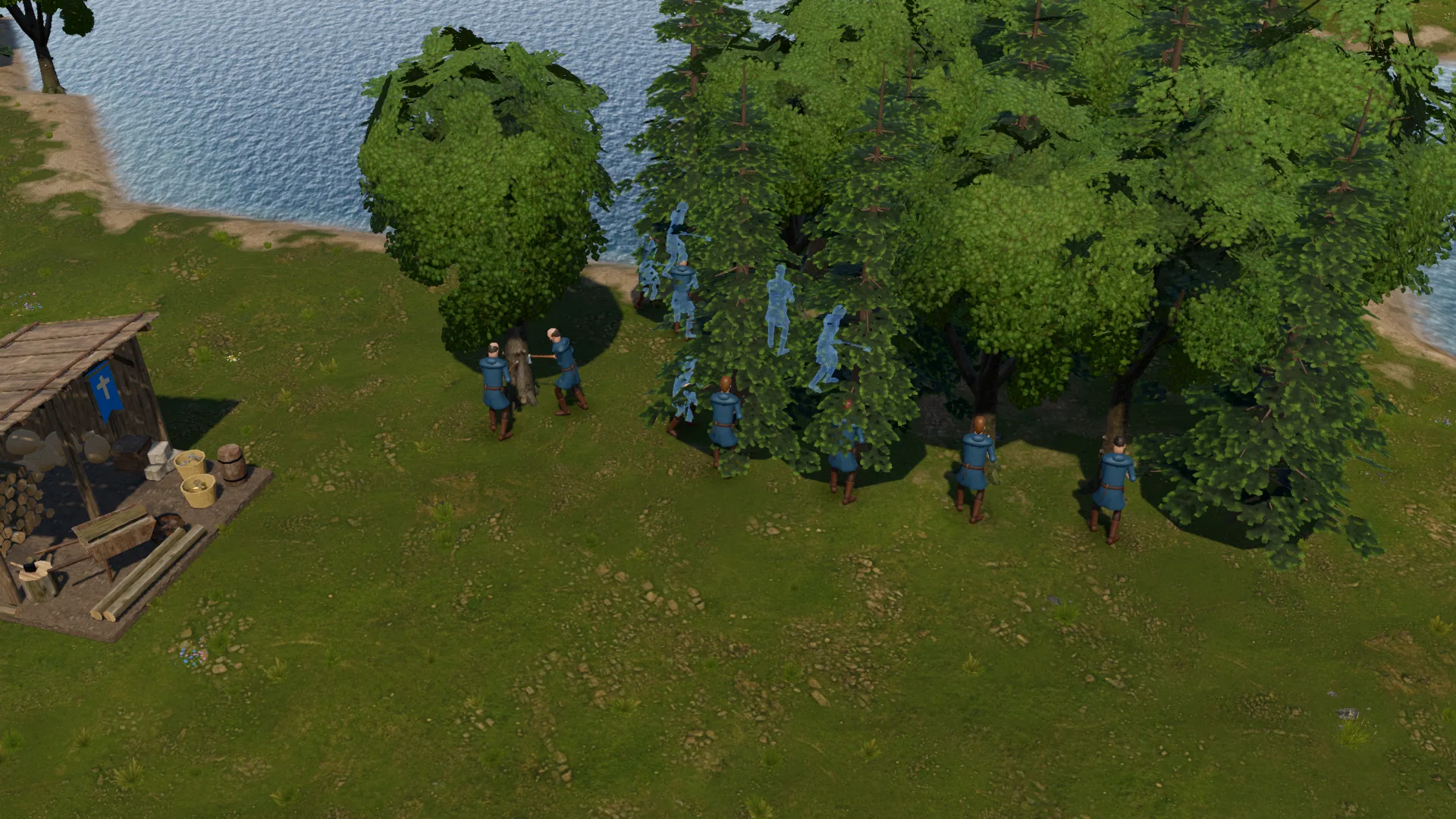
Human lumberjacks felling trees next to a camp and carrying the wood to it; the ones behind the treetops show as blue silhouettes.
Each lumberjack works on a tree of their own and carries the wood to the camp.

Workers that spread out

Every tree, vein or bush has its own work spots: workers spread out instead of crowding onto the same point. When a camp is finished, its builders go to the resource closest to it. Measured with 20 workers: 9 to 77% more resources per worker depending on the case, with none idle.

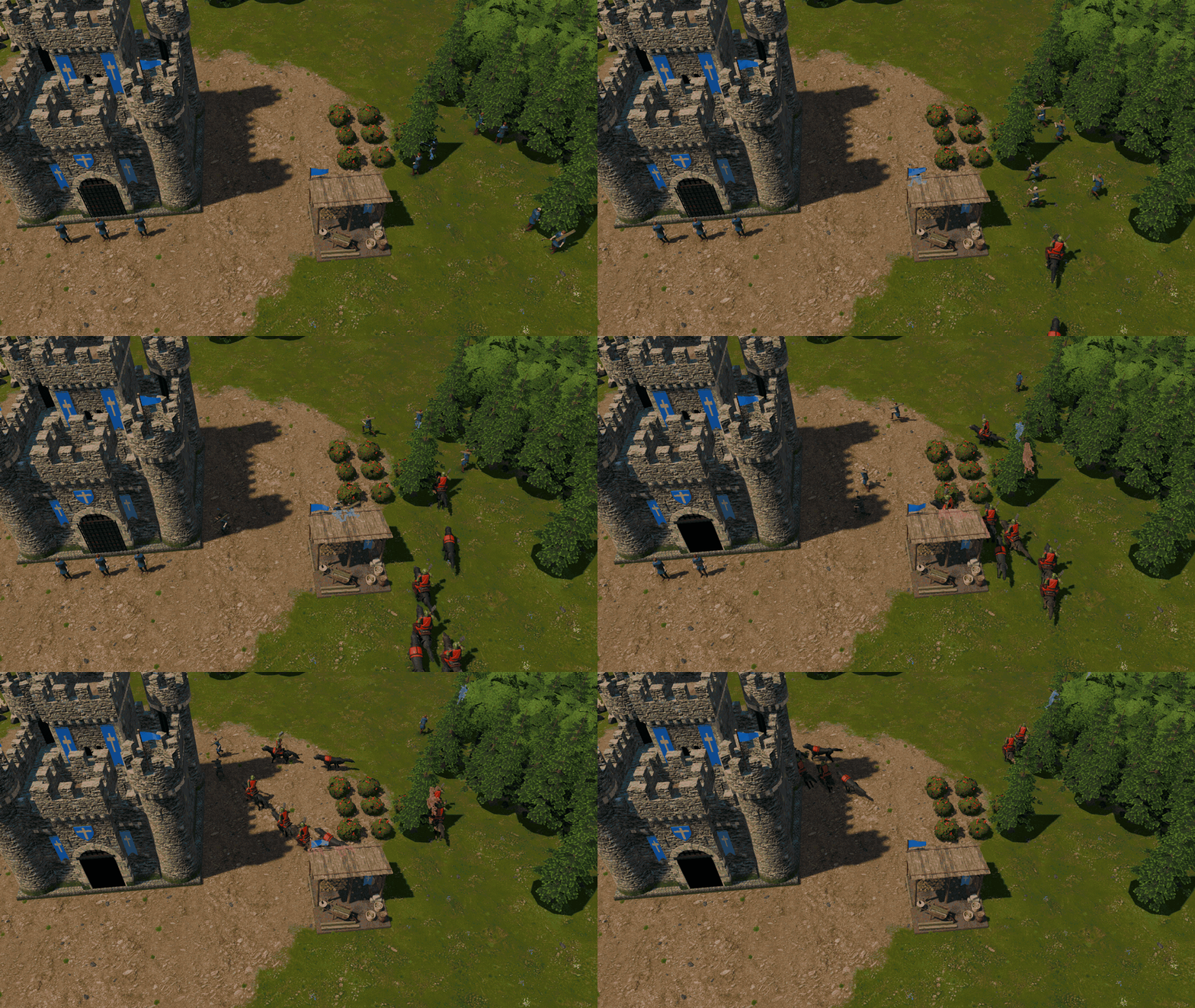
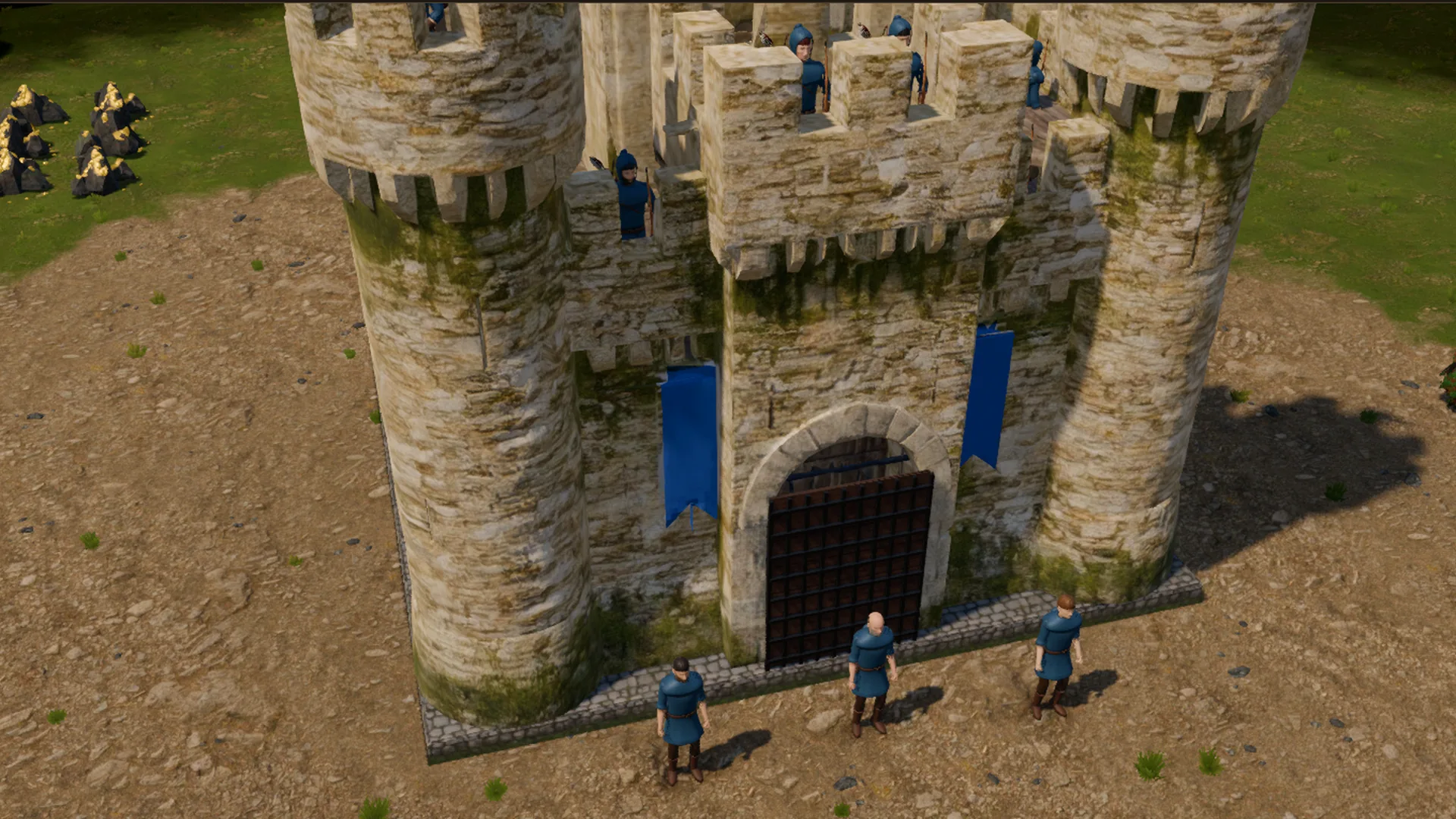
Orc warg riders swoop down on human lumberjacks, who run toward the door of the town center.
Riders swoop down on the lumberjacks: workers don't fight and run to the town center.

Workers that run for cover

Workers and peons don't fight: when threatened they run to the nearest shelter of their own, drop their load and go back to work by themselves once the danger has passed. Against a warg, the number of lumberjacks killed out of every six dropped from 2.1 to 0.6. With no town center or lair left standing, they fight as a last resort.

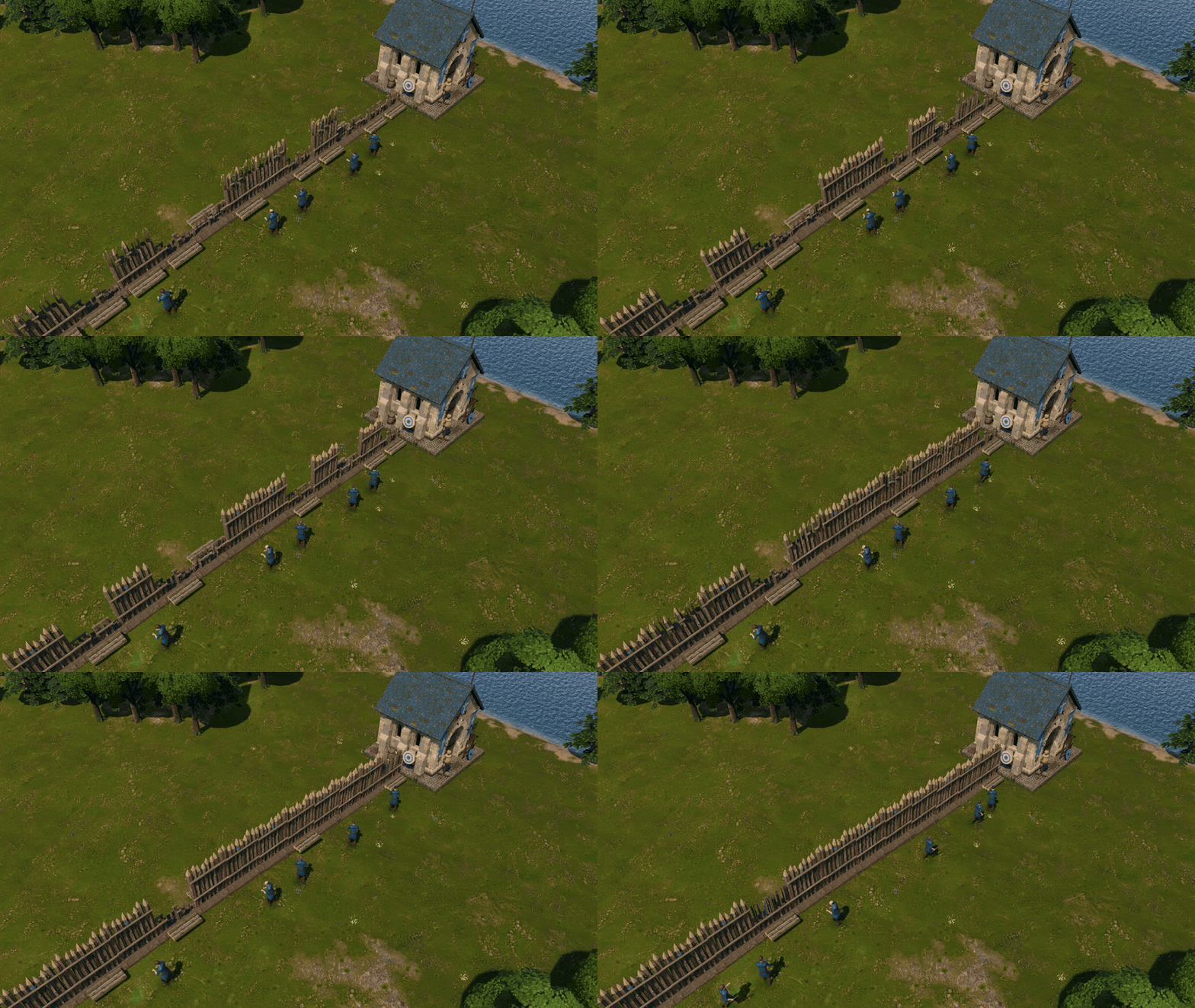
Six workers raise a wooden wall section by section, spread along the layout, up to a stone barracks.
Six workers raise a wall spread out along the layout; the last section ends up joined to the barracks.

Construction that grows and gets repaired

Buildings go up course by course on a scaffold, faster with several builders, and workers repair whatever is damaged. A foundation nobody has started refunds everything you paid when you delete it.

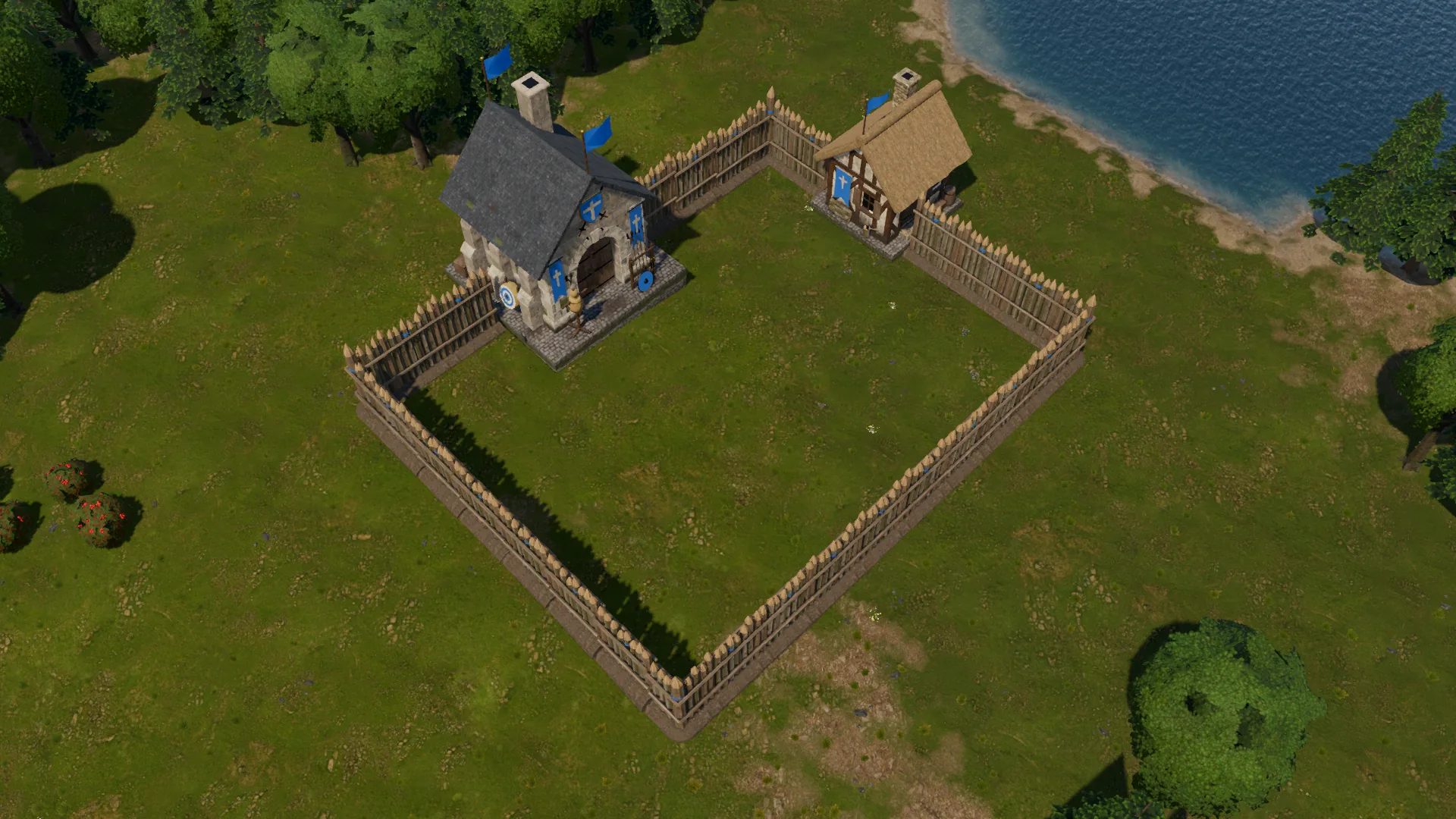
A square enclosure of wooden wall closed against a barracks and a house, next to a lake.
An enclosure of wooden wall closed against a barracks and a house: the sections meet flush, with no gaps.

Walls that join up

Wooden walls and gates for humans and orcs. You lay them out with two clicks, and a magnet snap completes the tile up to the building or wall ahead of it (Ctrl turns it off): the piece meets it flush, with no gaps. Builders spread out along the layout. Gates open for your own units and are solid for the rival, who breaks the section that cuts off their path.

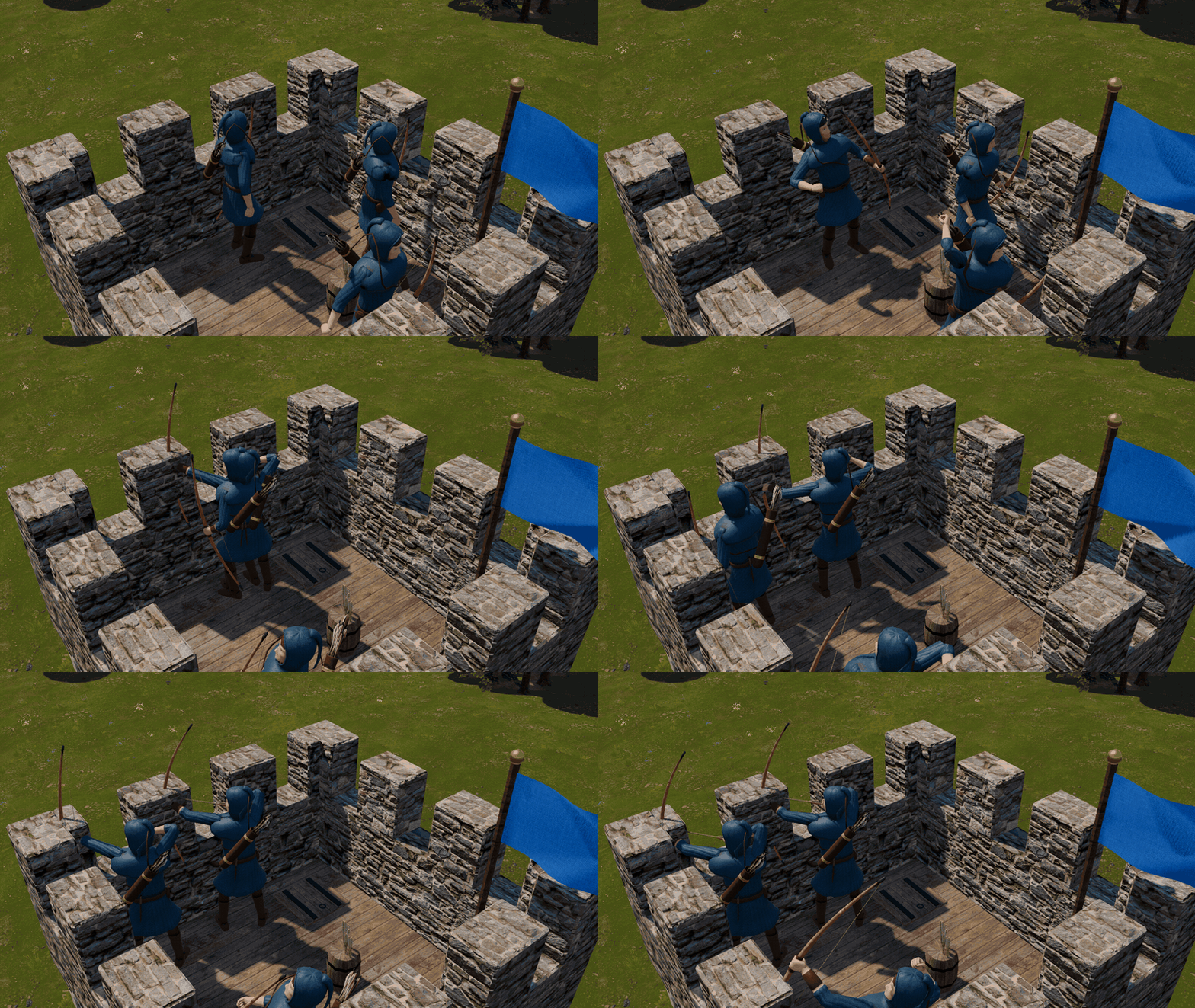
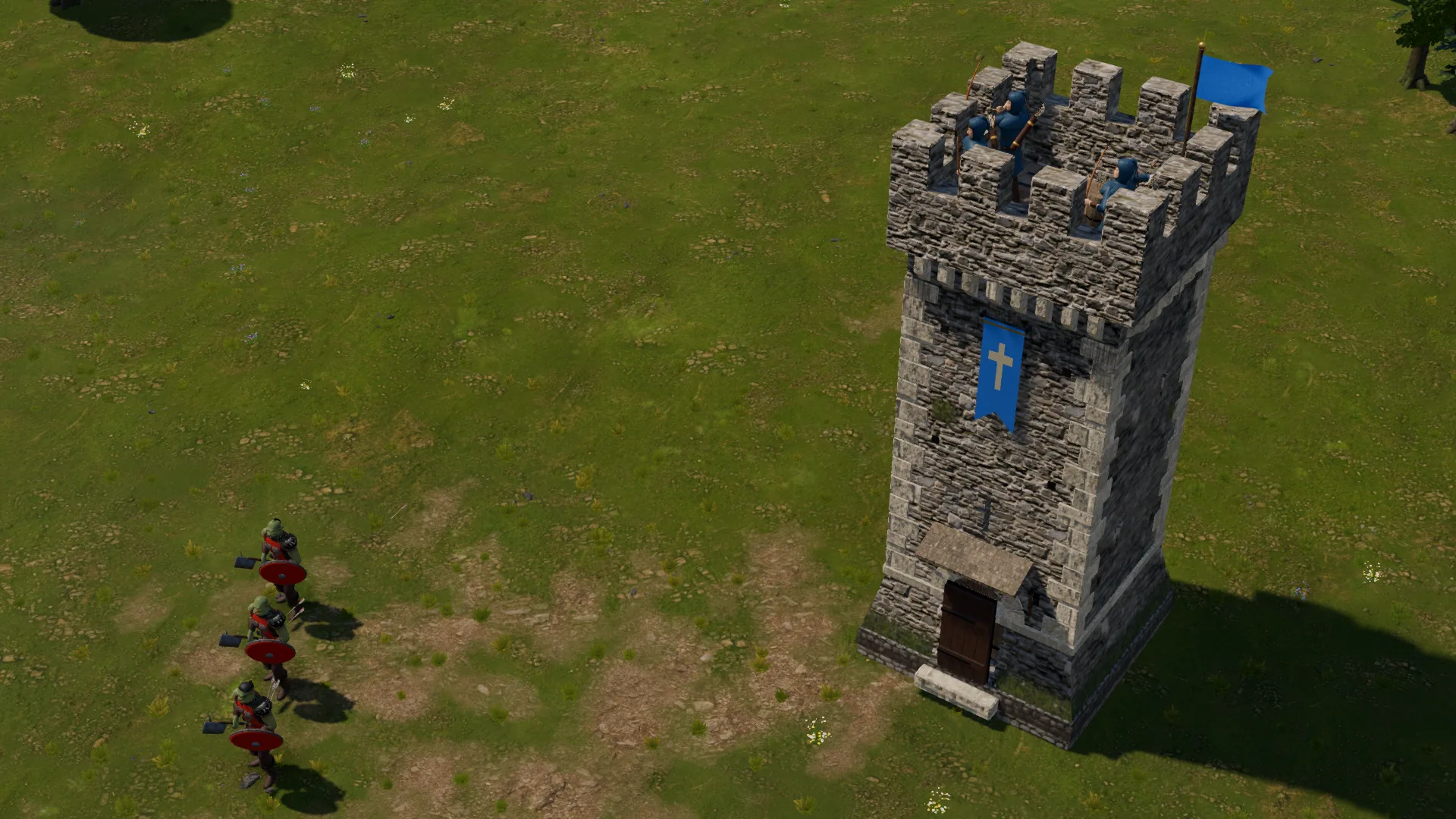
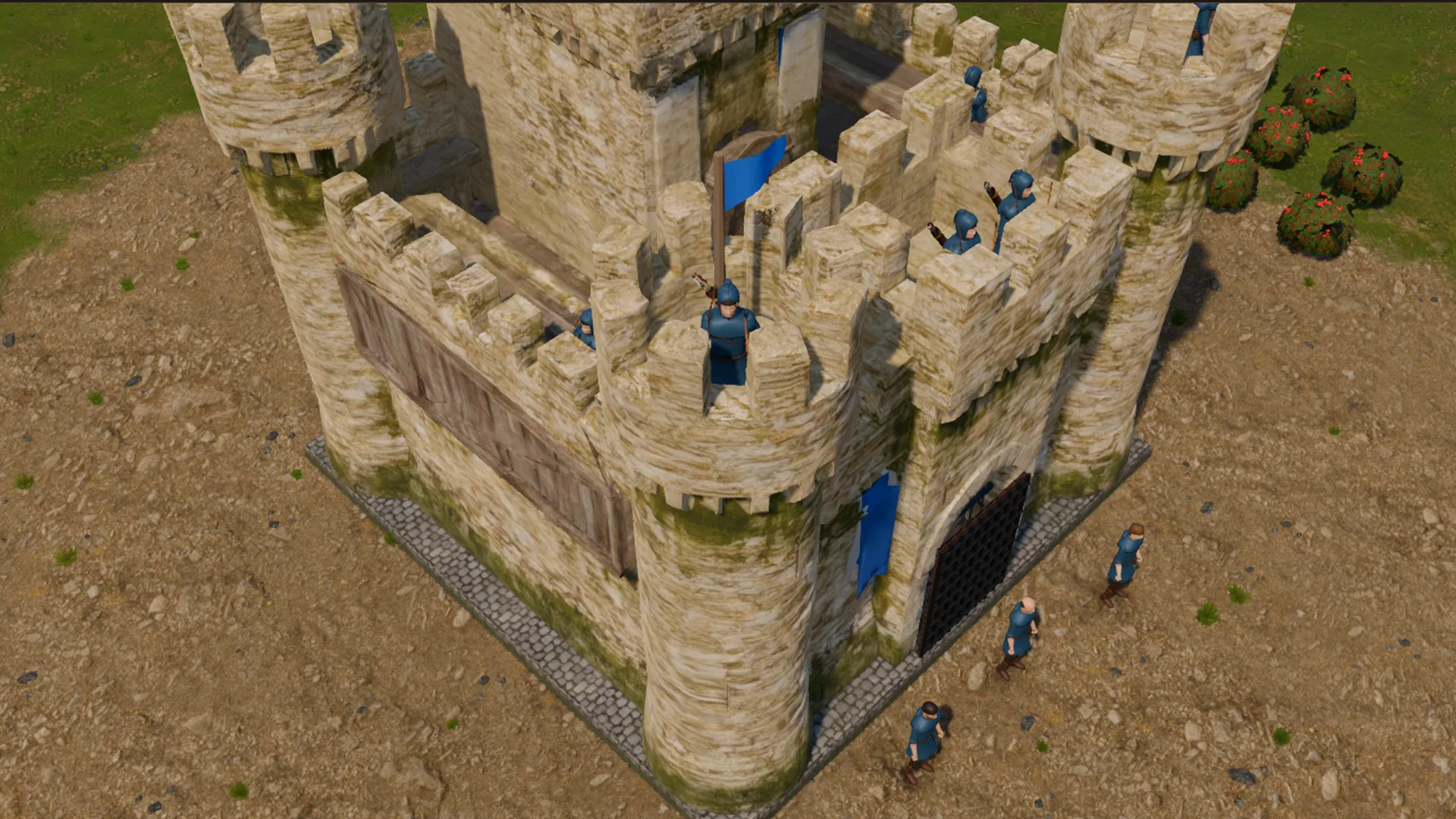
Three archers walk along the parapet of a stone tower to the posts that face the side the enemies are coming from.
The tower's archers reposition along the parapet toward the side the enemies are coming from.

Towers, town center, lair and watchtower

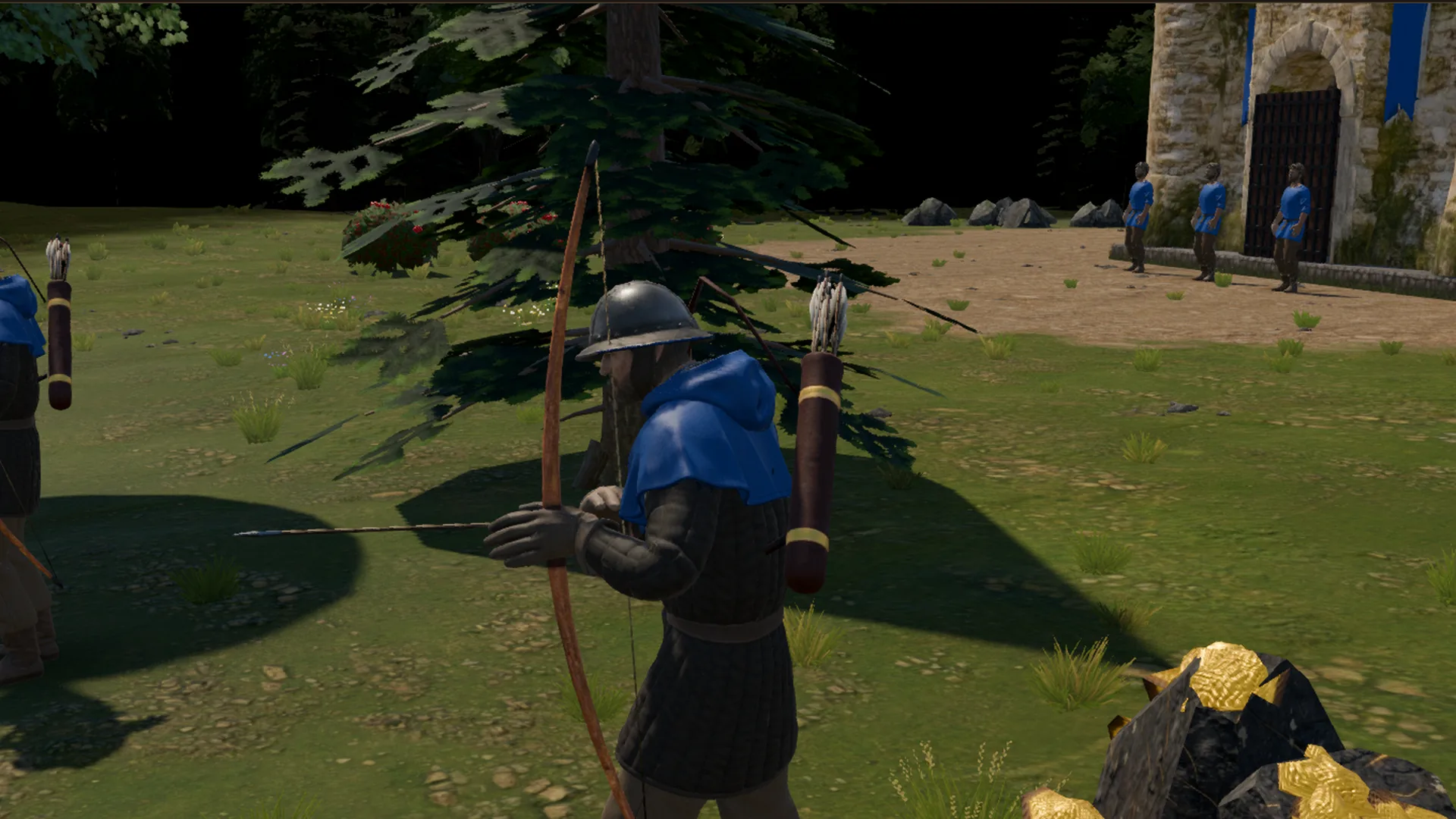
Soldiers and archers take shelter inside: they walk in through the door, climb to their post and shoot from there with their own range, one extra tile from up high. If the enemy switches sides, they walk along the parapet to the posts that face it. Those inside heal slowly, and the bell brings nearby workers in.

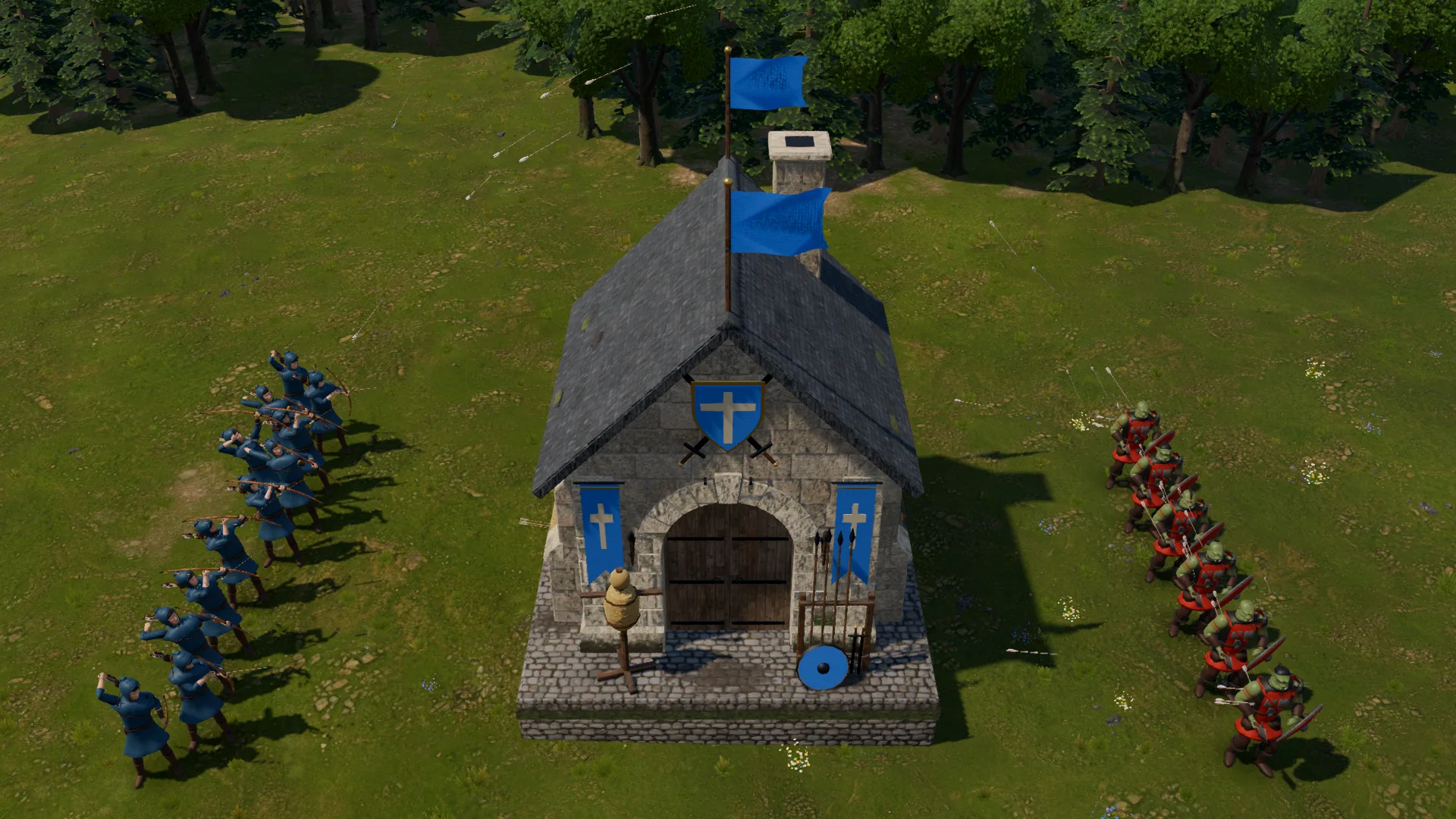
Human archers on the left and orc warriors on the right of a stone barracks; the arrows arc over the roof.
Human archers shooting at orc warriors on the other side of a barracks: the arrows fly in an arc.

Archery with trajectories

Arrows and javelins fly in an arc, aim at where the target will be if it moves, and spread out with distance. Accuracy rises with rank (from 100 to 250 on the panel). The ones that miss stick in the ground, the ones that hit stay in the body, and none pass through a building.

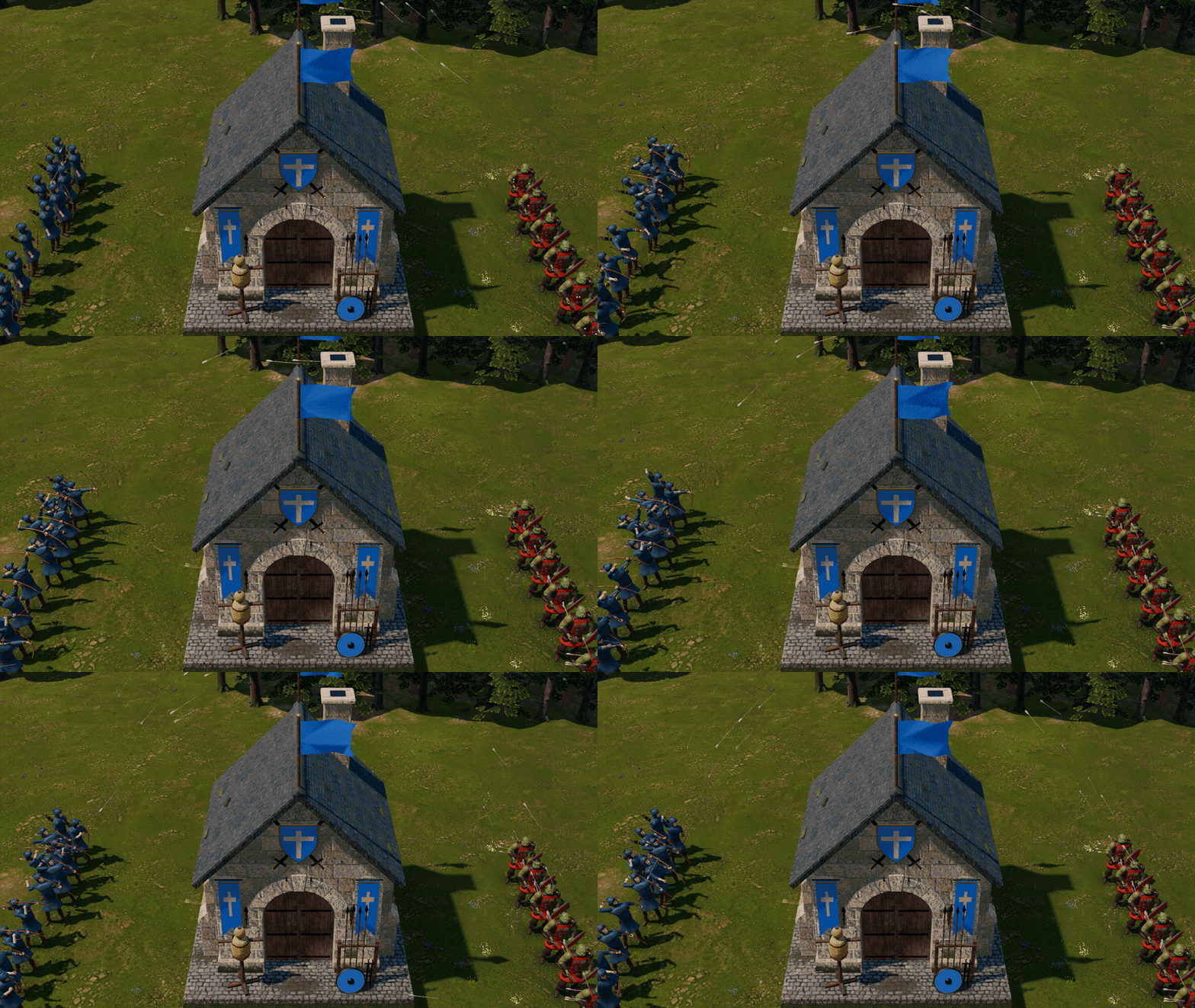
Human archers on one side of a barracks and orc warriors on the other: the arrows pass over the roof and the ones that miss stay stuck in the ground.
Lobbed arrows over the barracks roof; the ones that miss stay stuck in the ground.

Lobbed shots

With a building, a wall or allies in the line of fire, the archer aims higher and the arrow goes over. Units sheltered in a full tower that aren't facing the enemy also shoot “upward,” with their bodies tilted back.

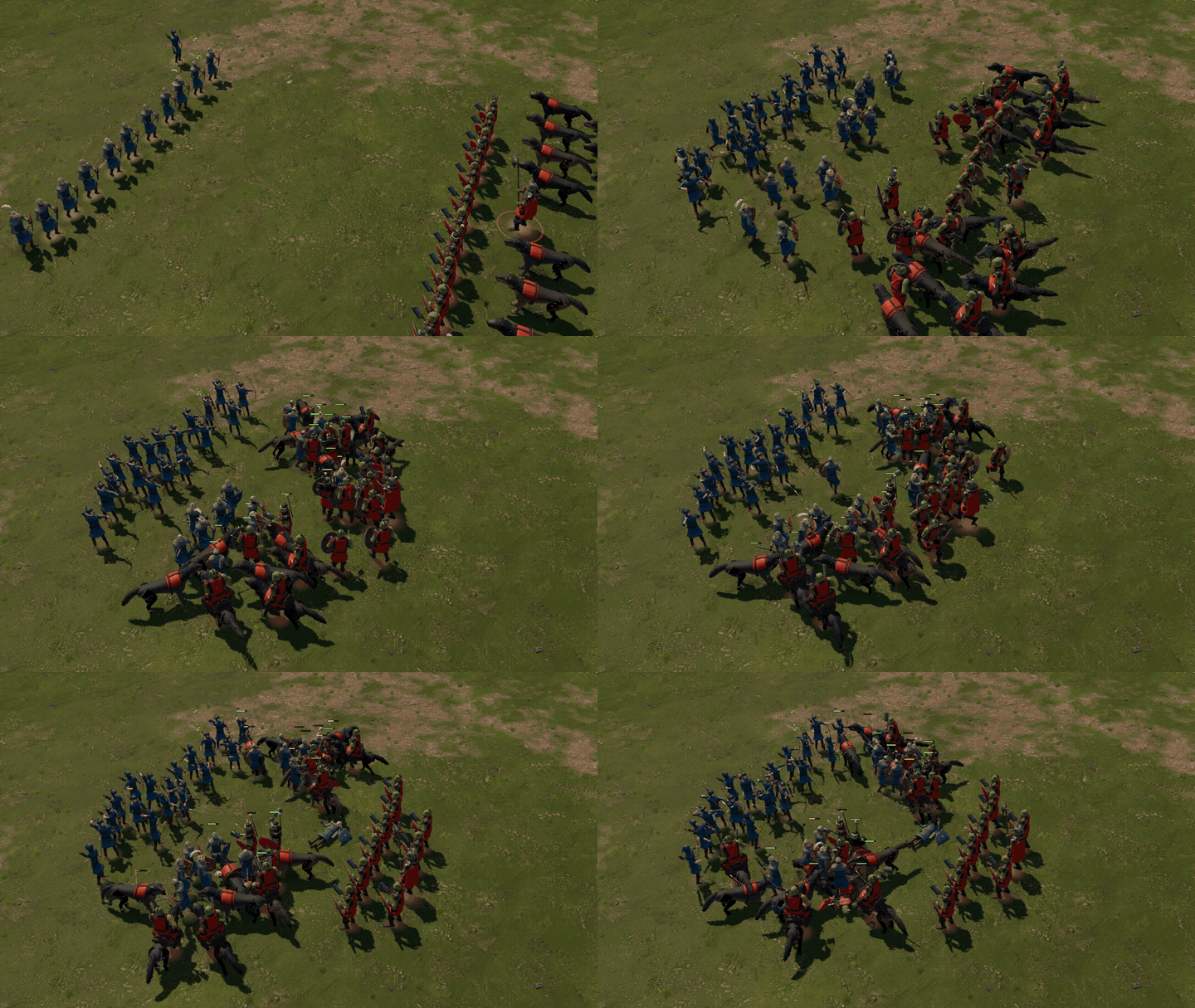
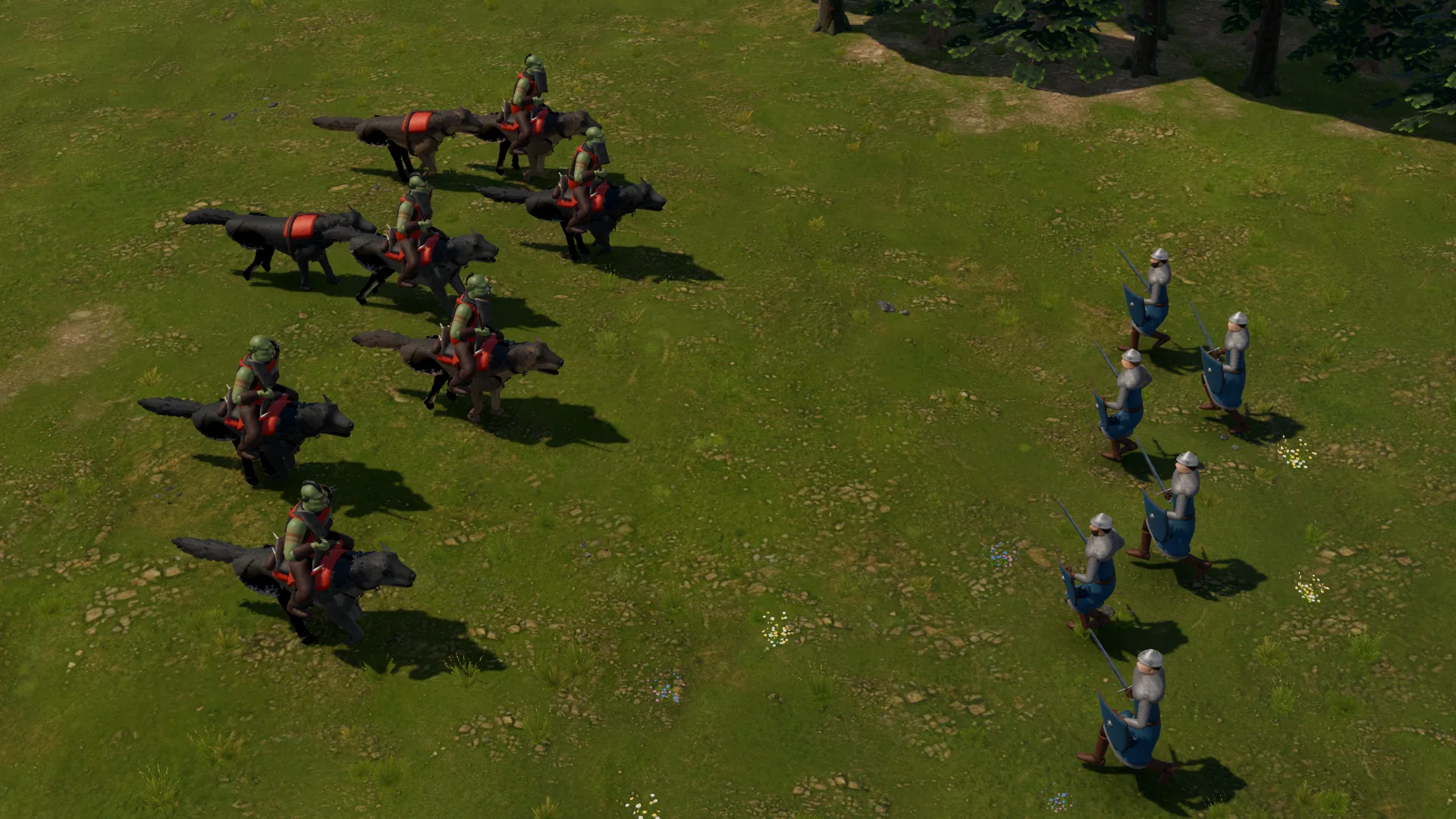
The human line clashes with orc warriors and wargs; the archers shoot from behind and the wargs leap on the shooters.
The clash: the human line holds, the archers shoot from behind and the wargs go for the shooters.

Formation and tactics

Units move in formation: infantry in front, archers behind, workers at the back, and wargs and riders on the flanks. On contact they fight as a line. On auto they spread their targets to avoid overkill, flank and surround; archers reposition if they're caught.

Ranks, inspiration and packs; nobody retreats

Four ranks by experience (Recruit, Soldier, Veteran, Elite) with more attack, armor, health and accuracy. Veterans inspire nearby recruits and soldiers, the warchief's war cry rallies the warriors, and three wargs on the same target hit 15% harder. Soldiers, archers, the warchief, wargs and riders don't flee: the fight is decided on the field. Tested with battles of around 250 units.

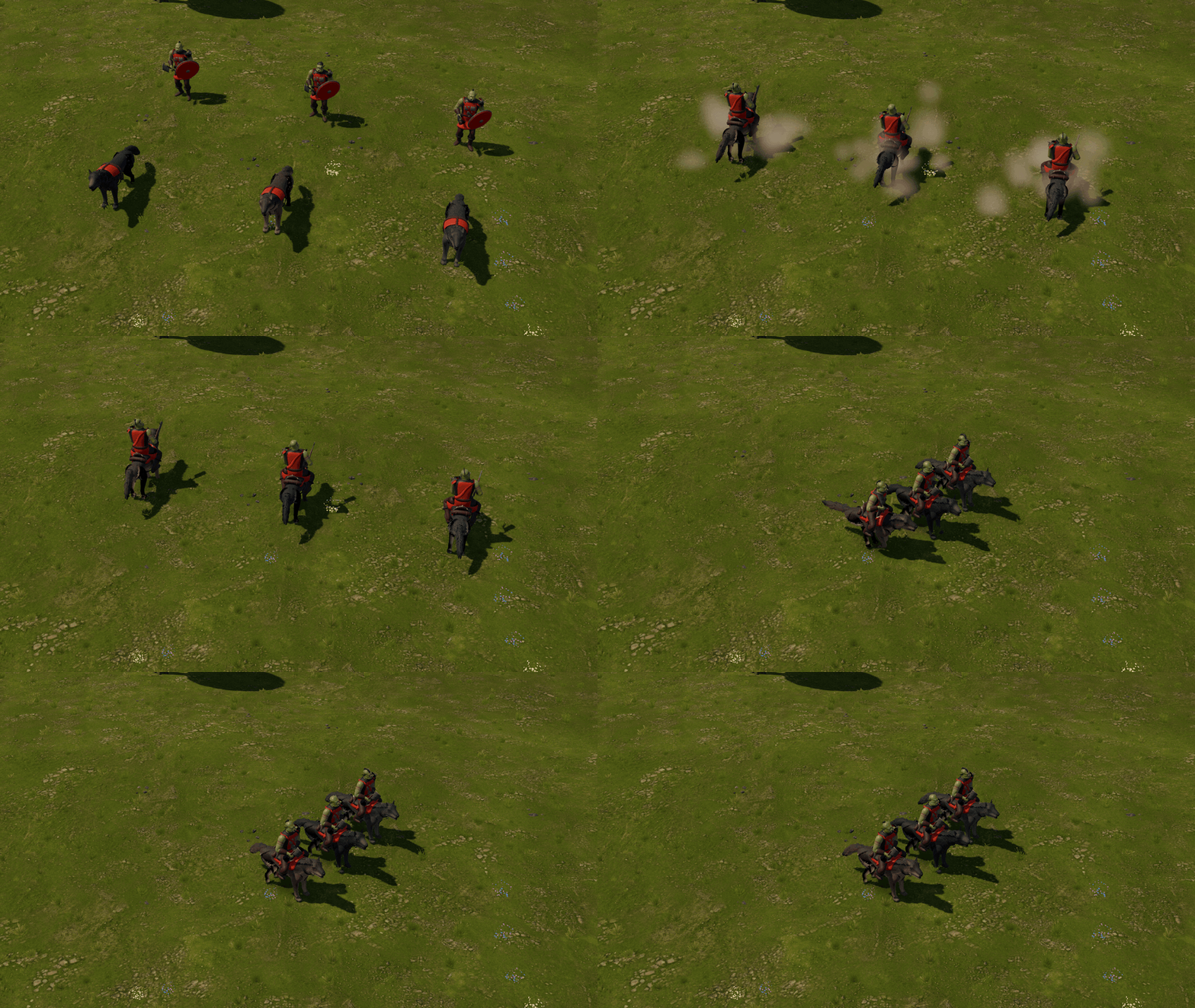
Three orc warriors mount three wargs, form riders and set off at a gallop.
Three orc warriors mount three wargs and form riders, who set off at a gallop.

Wargs and riders

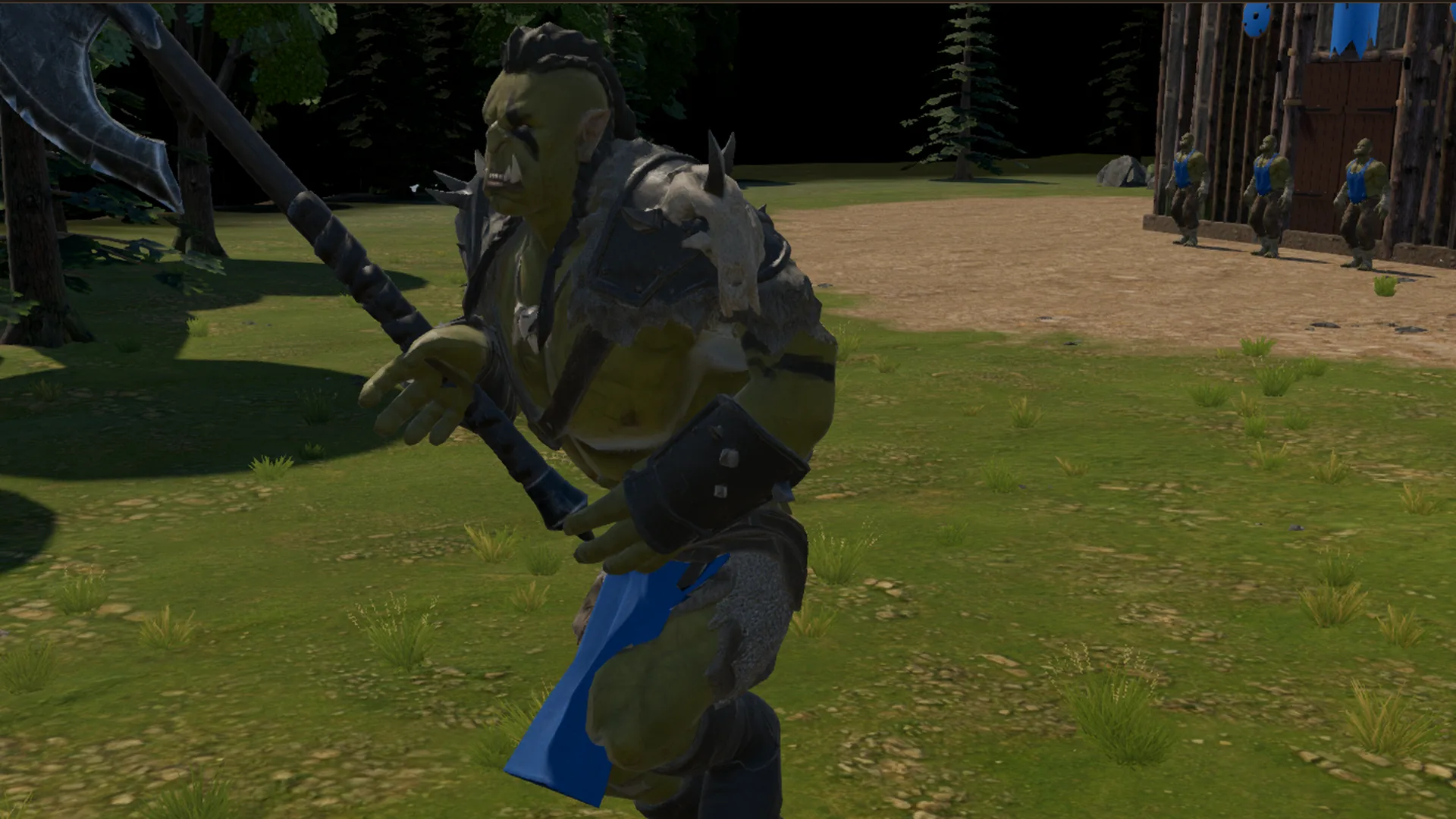
The warg den trains wargs, which leap on their prey, bite, and hit harder in a pack. An orc warrior can mount a warg and together they form a rider: faster than the warrior on foot, with the rank and health of both. When it dismounts, they become two again. The palisade gate opens for your own riders.

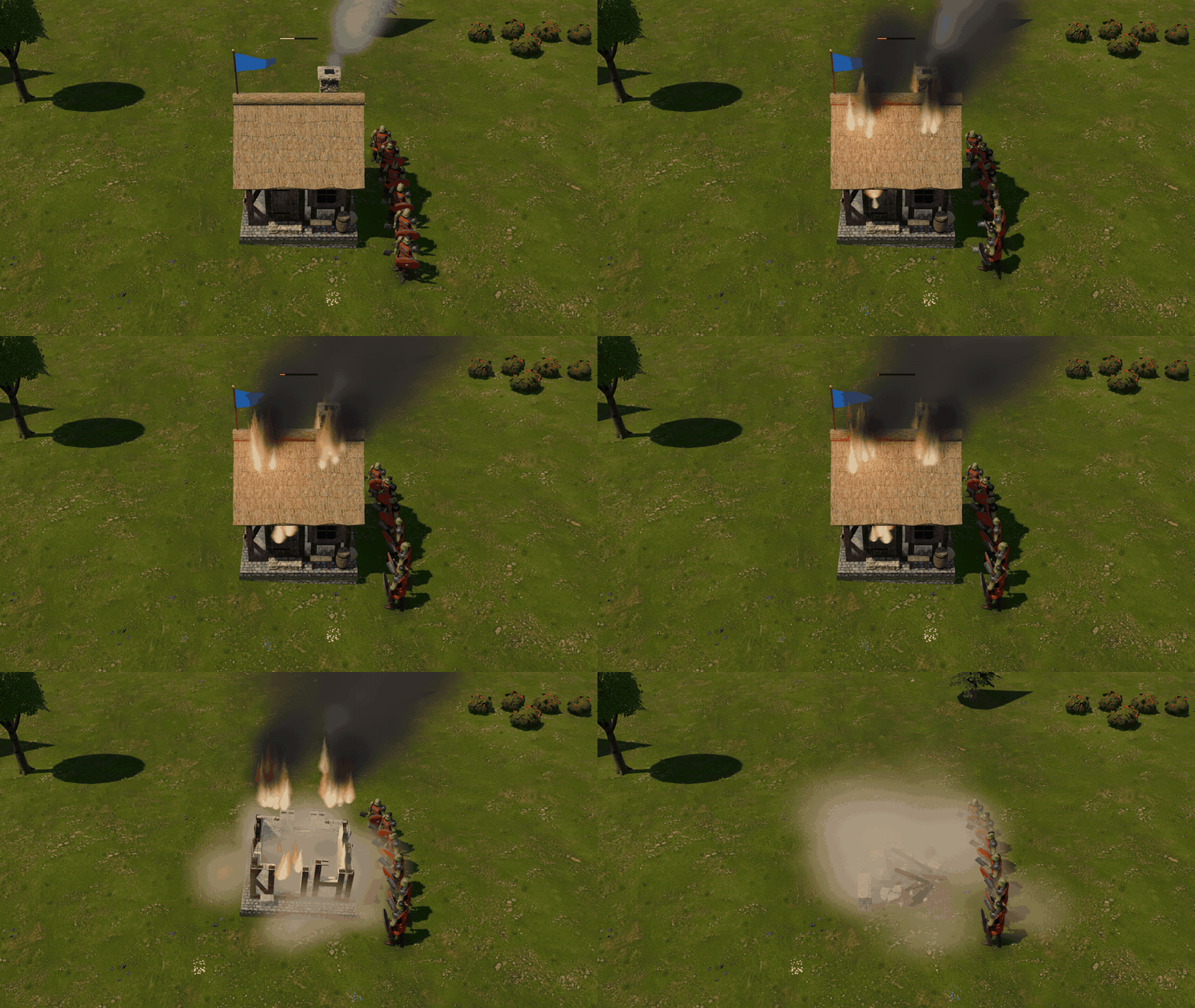
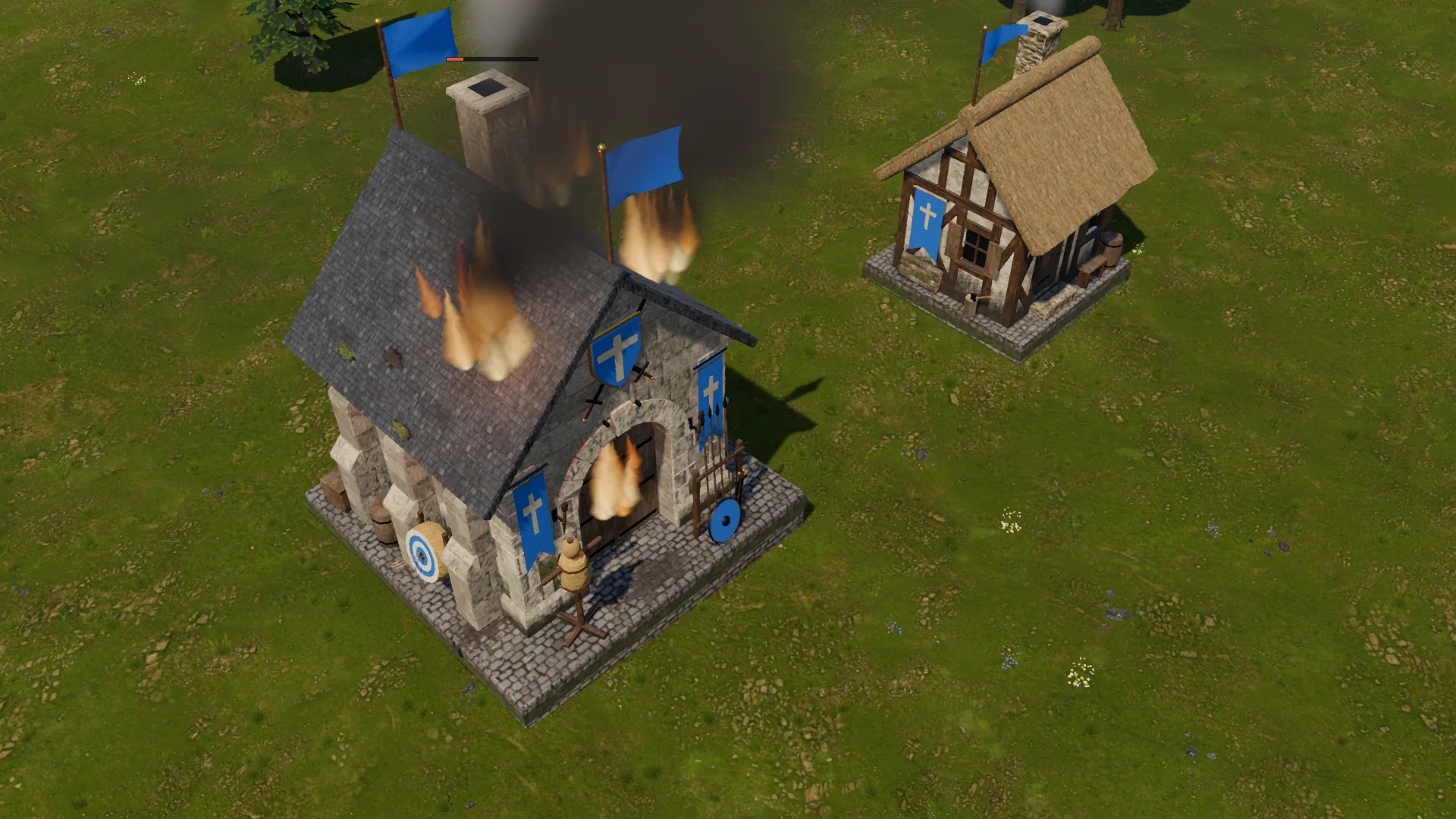
A thatched-roof house hit by orc warriors from one side only: it smokes, burns and leans toward that side as it falls.
A building hit only from the east smokes, burns and falls toward that side.

Buildings that burn and collapse

A building below half health gives off smoke, and below a quarter it burns, with flames over the roof and the door. When it falls it tilts toward the side that took the most hits and leaves rubble and dust. Damage is recorded per side and repairs restore it in the same proportions.

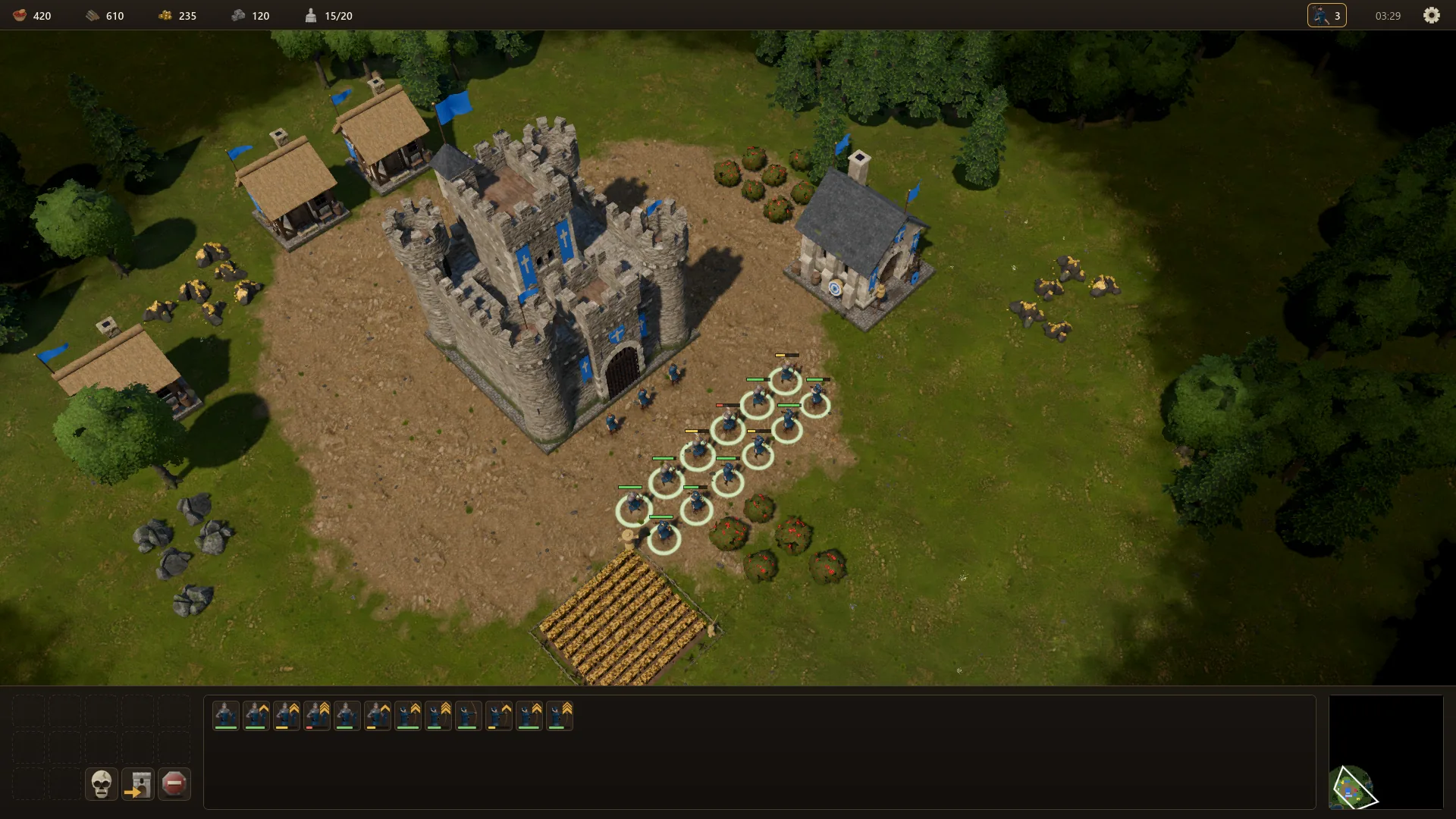
Game interface: resource bar at the top, twelve selected units with health and rank bars in front of the town center, command grid and minimap with fog.
Twelve units of different ranks selected: each one's health and rank, and the group's commands.

Interface and controls

Top bar with food, wood, gold, stone, population, idle workers and clock. A 15-command grid with keyboard shortcuts, a panel with portrait, health, rank, experience and actual stats, a production queue, multi-selection with health and rank bars, and a minimap with fog and attack alerts. Select by click, box, double click and groups with Ctrl+1 to 9; queue orders with Shift.

And also

  • Deleting units and buildings

    The Delete button (Del) removes your own units and buildings. The building collapses and its garrison comes out alive. The confirmation only appears for big things: the last town center or ten units at once.

  • Rival AI

    It only knows what it has seen and sends out scouts. It gathers its army out of enemy range and attacks together, opens a second front with fast units against your economy, builds whatever counters what it has seen of the player, and defends with just enough. Three difficulties with no cheating: they change reaction, tactical aim and economic efficiency, not resources.

  • Sound

    More than 230 original sounds and tracks: sword and axe impacts on flesh and armor, bites, arrows that sound different depending on where they hit, collapses, wordless voices for each faction, ambience of wind, birds, water and the din of battle, and calm and battle music per faction, with drums for the orcs. Volume per channel, mute and language from the gear icon.

  • Handmade art

    Rigged characters with three or four head variants per type, buildings with scaffolding and flags in the side's color, trees, rocks and veins: all modeled by script in Blender, with free photographic textures.

  • Victory and defeat

    Whoever leaves the rival with no buildings and no workers wins. The end screen shows the match duration and returns to the faction screen.

Coming in the next update: new models

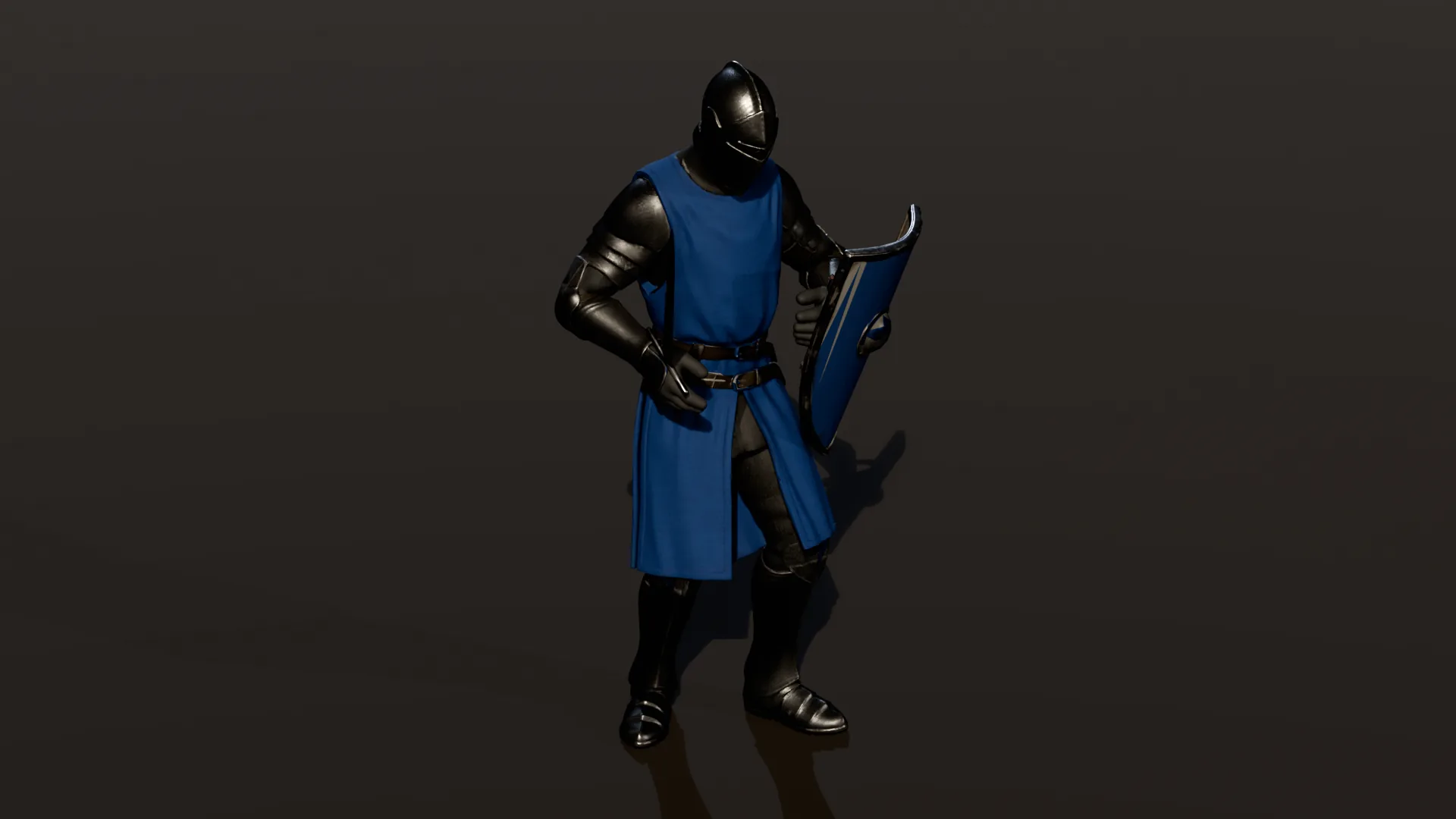
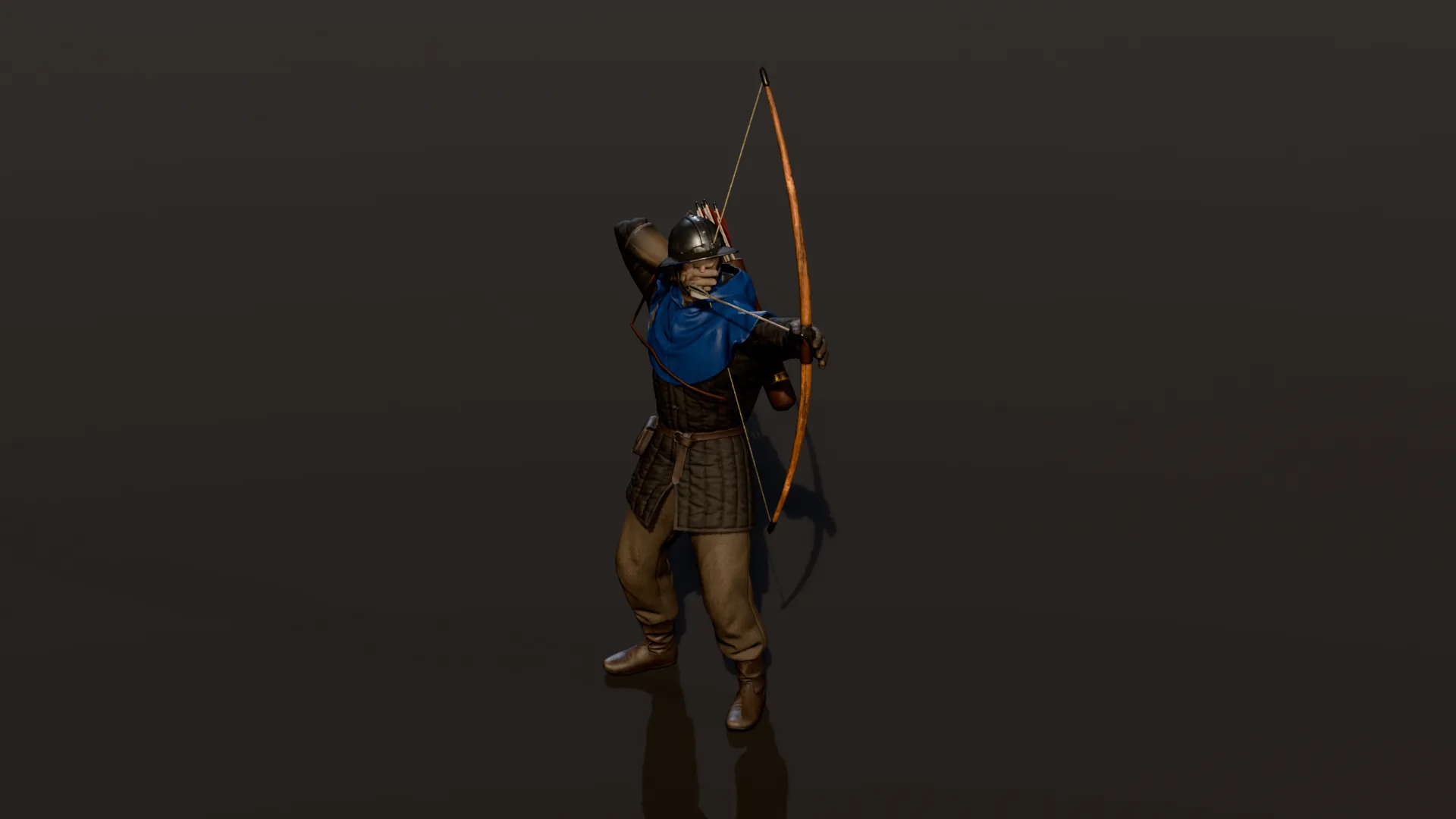
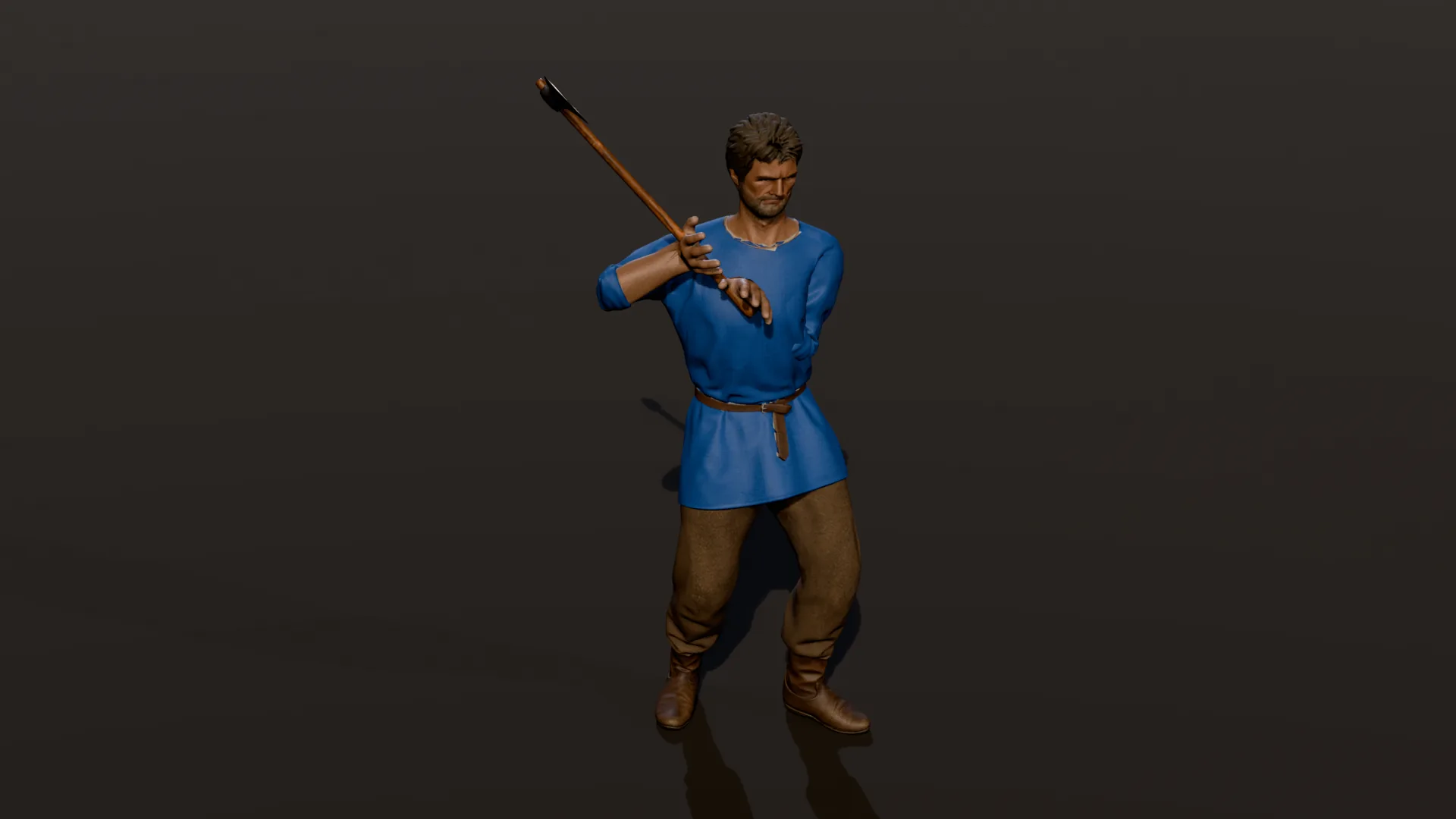
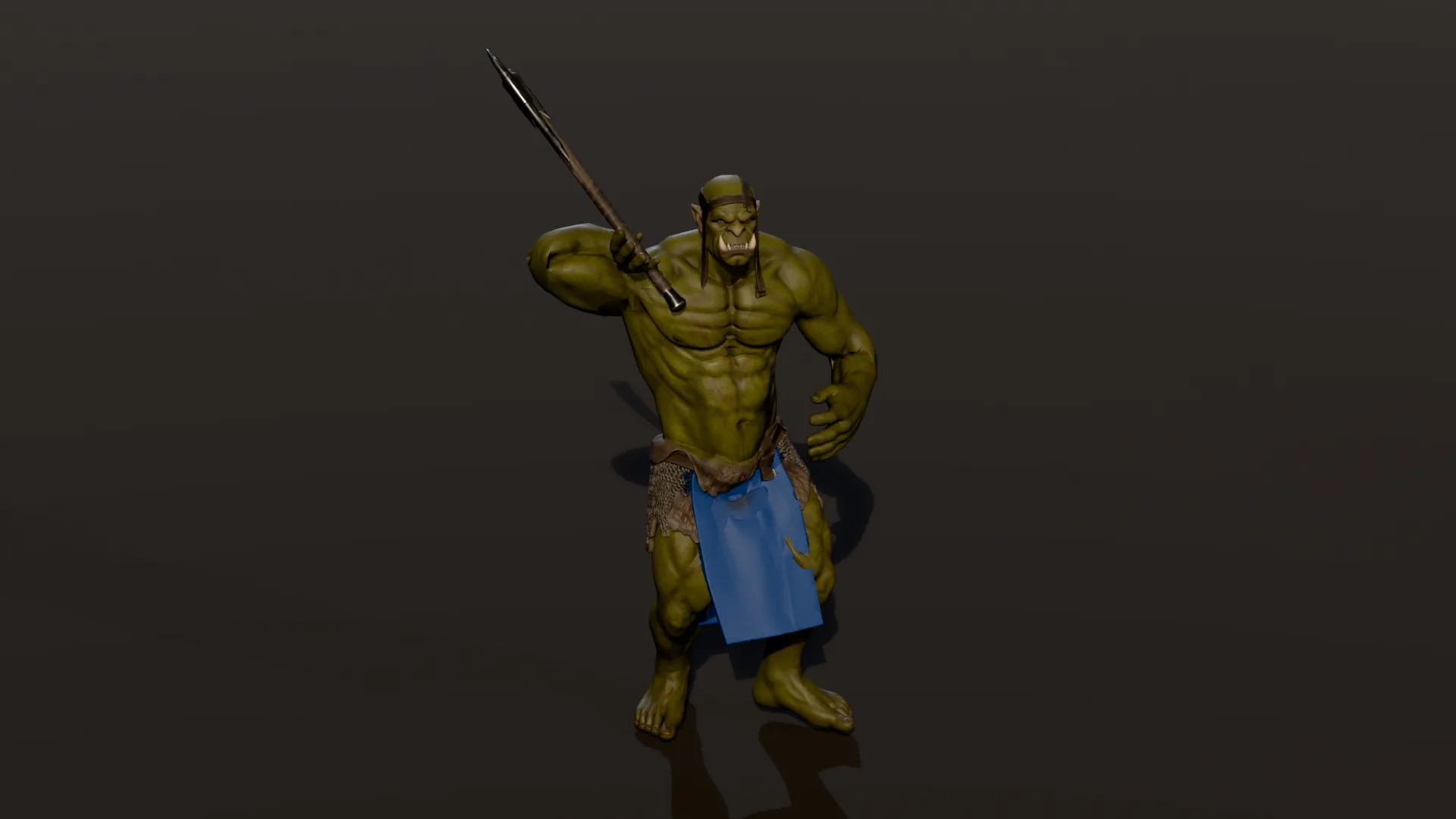
Infantry, archer, worker, orc warrior, peon and warchief, and the command centre, rebuilt with far more detailed models. They arrive with the next downloadable version.

What's next

Next

  • Main menu and options

    A menu with a live background, new game (faction, rival, difficulty, map and seed), pause and an end screen with stats. Options: display, graphics with presets from Low to Ultra and a Recommended one based on the GPU, FSR 2.2 upscaling, per-channel sound and rebindable controls. No DLSS or frame generation: the engine doesn't include them.

  • Remade characters and animations

    All units get remade with more believable anatomy and clothing and photographic textures, with free motion-capture animations for fighting, gathering and building.

  • Attack and death variants

    Three or four attacks and three or four deaths per unit, with the fall depending on where the blow came from, so a row of units doesn't all hit the same way at the same time.

  • A rider that can die in part

    When a rider falls, both die (40%), only the warg dies and the orc fights on foot (30%), or only the orc dies and the warg is left loose (30%). The survivor keeps its rank and part of its health.

  • Women in every unit

    Every unit is either male or female, with their own models, names and voices and no sexualization. Women have less health but are more agile and accurate; men hold up better on the front line. At equal cost, no group performs better than another.

  • Different healing per faction

    Humans: a medic who heals in an area, doesn't fight and flees like the workers. Orcs: a brew with one or two charges that is drunk automatically at low health and refilled at the lair.

  • Workers shooting from inside buildings

    Today sheltered workers already shoot, but you can't see them. They'll show up on the battlements: short bow or sling for humans, javelin or stone for peons.

  • Day and night, and rain

    A cycle of about 10 minutes with a rotating sun, a bluish but readable night, and torches and windows that light up. Rain slows down and weakens humans; orcs run faster and plan better.

  • Shields and weapons

    The orc warrior will fight with a single-edged axe. Each human infantryman randomly picks between a shield on the arm (takes 20% less damage from arrows) and a shield on the back with a two-handed sword (+1 attack).

  • Paths, footprints and mud

    Orcs wear the grass down into mud paths and leave boot and warg paw prints; humans don't. Units get dirty from the ground they walk on and get clean again with time, water or rain.

  • Stone walls

    For humans: walkable stone walls with a crenellated wall walk, a gate with a staircase and a gate tower. Soldiers and archers climb up, move along the top and shoot with one extra tile of range. If a section falls, whoever is on top falls with it.

  • Buildings that give way on the side that was hit

    A building attacked from one side crumbles on that side: planks and stones go missing, the roof sags and rubble falls. Modeled doors and staircases in the town center, tower, watchtower and lair, so the garrison really climbs up.

Later

  • Replayable matches and a base for multiplayer

    The logic moves to fixed steps and every order is a command: the same seed and the same commands give the same match on any machine. Replays are recorded, watched at ×1, ×2, ×4 or ×8, and report the step where they desync.

  • Technology

    Human smithy: fire arrows, longbow, chain mail, iron tools and masonry. Orc war forge, with few upgrades and all of them for war: serrated axes that make enemies bleed, war drums and bigger wargs.

  • Fire as a weapon

    Wooden buildings burn and the fire can spread to their neighbors; stone doesn't burn. Rain weakens it and repairing puts it out. Orcs have fire built into their javelins and strikes; humans have to research fire arrows.

  • Hunting and wildlife

    Deer, boars and wolves. Workers hunt animals only. Humans butcher the kill and carry the meat to the drop-off in loads; orcs drag the whole kill to the lair (fast for a warg, slow for a peon). Orcs eat only meat: no berries.

  • Knight and royal guard

    A knight trained at a stable, who can dismount and can die in part, like the orc rider. A royal guard in full plate: slow and hard to kill.

  • Shaman, berserker and axe thrower

    Orc shaman: drums that speed up nearby orcs, brew refills in the field and a curse. Berserker: more damage and faster the less health it has. Axe thrower: the first orc ranged unit, with short range and a heavy hit.

  • Terrain and situation traits

    Each unit with an advantage and a disadvantage: cavalry on flat ground, archers on high ground, infantry in tight formation, orcs ambushing from the forest. They show in the panel and the AI makes use of them.

Further out

  • Giant map and strategic zoom

    From the current 112×112-tile map to a 512×512 one, with terrain in blocks, zoom out until you see the whole map with icons per group, hierarchical pathfinding for large armies, and matches that can be saved and loaded.

  • Capitals and fronts

    A human capital with a stone wall, castle and plaza, and an orc fortress with a great lair and a double palisade, each at one end. Between the two, at least three distinct corridors: plains, a river with fords and a mountain pass.

  • Territories and conquest by banner

    The map is divided into territories with borders in the owner's color, around neutral villages and towns of both races with their militia. They are conquered by capturing the banner, or razed and rebuilt. The central building of capitals and towns isn't destroyed: it surrenders and is taken.

  • Slaves

    Workers from a captured town pass to the new owner in shackles, produce somewhat less and keep what they knew how to do. They are freed if the original owner retakes the town.

  • AI that thinks in territories

    It expands onto neutrals that are cheap to defend, protects threatened borders and attacks the weakest front, sometimes two at once. It razes or captures depending on the faction.

  • Minor factions

    The Deep Iron dwarves (crossbowmen, engineers, ram and catapult), the Northern Clans, mercenary goblins who sell themselves for gold, the druids of the Old Forest (felling their forest lowers their loyalty) and the Daughters of the Steppe (horse archers who shoot on the move). They join whoever completes their commissions and can switch to the rival.

  • Campaign with heroes

    A Warcraft 3-style campaign that starts with the orcs: a young warrior who wants to take his clan to war because the humans killed his father. Then, a rebel prince defending the human border. Heroes with levels, abilities and gear: every defeated boss drops its weapon and a trophy that shows on the model, and fallen heroes are revived without losing anything. Units and buildings unlock within the story.

  • Eternal war

    A free-conquest mode on the giant map, separate from the campaign.

  • Online multiplayer

    Matches against other people, first over LAN and later through Steam, built on top of the replays.

  • Armory

    Workers would put down their tool and take swords from an armory to fight.

Download

Pre-alpha 0.1.1 for Windows

Download for WindowsIronAndFang-prealfa-0.1.1-windows.zip · 220 MB

Windows SmartScreen or your antivirus may show a warning because the .exe isn't signed: click “More info” and then “Run anyway”.

This is a pre-alpha, made for trying out and giving feedback: leave your thoughts in the comments on its itch.io page, where you can also download it. There is no main menu, pause or saving yet, and some things are unpolished. To quit, close the window (Alt+F4). The game comes in English and Spanish: it starts in your system language and you can switch it from the gear icon.

Requirements

  • Windows 10 or 11, 64-bit.
  • A GPU with Vulkan 1.2 or DirectX 12 and an up-to-date driver. Tested on an integrated Radeon 760M.
  • About 400 MB of free space. Nothing to install: unzip it and open IronAndFang.exe.
SHA-256 of the .zip · 230,538,852 bytes
125d24bccbf1cd4a703666234b965f8bcdb757d591a17f629c9c8aeae0e7b67a
SHA-256 of IronAndFang.exe · 349,086,416 bytes
22c7259bc8e2433eb36250b9c0411230ee77d250675ef018a64c95ab213130a8
Controls
Left click
Selects; dragging draws a selection box. Shift adds to the selection.
Right click
Moves, attacks or gathers. With Shift the order is queued.
QWERT
Top row of the command grid. ASDFG the middle row, ZXCVB the bottom row.
Arrow keys
Move the camera, as do the window edge and a click on the minimap.
Wheel
Zoom.
Alt + drag
Rotates the camera. Middle-click drag pans it.
Home
Resets the view.
1 to 9
Select a group; Ctrl + number saves the selection to it.
H
Goes to the central building.
Space
Centers the camera on the selection.
.
Selects an idle worker.
Del
Deletes the selection, with confirmation for big things.
Esc
Cancels placement or clears the selection.
Ctrl
Turns off the magnet snap when laying out walls.
Gear icon
Volume per channel, mute and language (Español / English).
If something goes wrong

The game keeps a log of every run. Pasting this path into the File Explorer address bar brings up godot.log (the latest session) and the earlier ones with dates. Paste the end of it in a comment on the itch.io page, along with your graphics card and what you were doing.

%APPDATA%\Godot\app_userdata\Iron & Fang\logs

Credits

Textures
All CC0, no attribution required. Poly Haven: rocky_terrain_02, aerial_grass_rock, forest_ground_04, coast_sand_01, ganges_river_pebbles, rock_face_03, white_plaster_rough_02, rough_wood, weathered_brown_planks, castle_wall_slates, medieval_blocks_03, thatch_roof_angled, roof_slates_02, cobblestone_floor_04, bark_brown_02, pine_bark, mossy_rock, hessian_230, brown_leather and fabric_leather_02. ambientCG: LeafSet009 and LeafSet010.
Audio
Original work of the project, generated by synthesis with scripts: no third-party recordings or samples. CC0 1.0 license. Author: Age of Med (the game's former name), generated by script.
Models and animations
Made by script in Blender, with no third-party models. There is no motion capture yet.
Engine and typeface
Godot Engine 4.6, MIT license. The typeface is the system's, both in the game and on this page.